
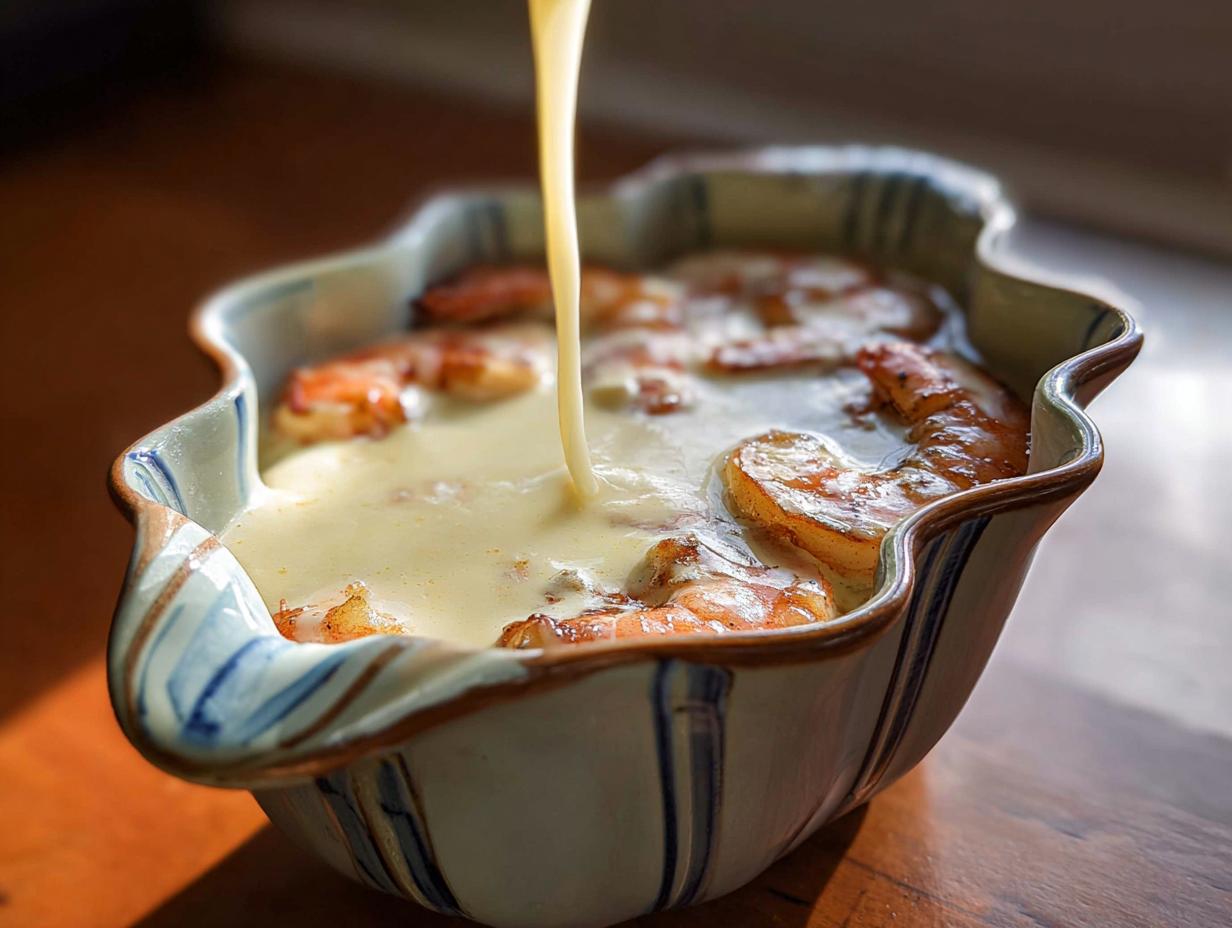
If you’re looking to transform a simple piece of pan-seared fish or some beautiful scallops into something truly spectacular, you need a showstopping sauce. And folks, I promise you, creating a luxurious Champagne Cream Sauce for Seafood is far easier than you think! It brings that incredible elegance you expect from a fine dining experience right into your own kitchen. I still remember the first time I served this sauce. It was a crisp summer evening, and I wanted to impress my friends with a simple seafood dish accompanied by a sauce that exuded elegance. As the sauce simmered, the aroma of champagne and cream filled my kitchen, creating a real sense of anticipation. When I drizzled it over perfectly seared scallops, their delighted reactions told me I had created something special. That moment sparked my passion for exploring sauce-making, and since then, I’ve made it my mission to craft rich and enticing flavors that transform meals into unforgettable experiences.
Why This Champagne Cream Sauce for Seafood Will Impress Your Guests
Honestly, this isn’t just any sauce; it’s the secret weapon in your cooking arsenal. When you present a dish topped with a shimmering, rich Champagne Cream Sauce for Seafood, people instantly assume you’ve been slaving away for hours. But we know better, right? The real magic here is taking restaurant-quality flavor and making it totally manageable for a Tuesday night or for your next big party menu.
Here’s why this particular sauce creation is something you absolutely need in your rotation:
- It delivers unparalleled elegance. The subtle acidity from the champagne cuts through the richness of the cream perfectly, giving the sauce a bright, sophisticated lift that tastes expensive, even if you use a friendly bottle of bubbly.
- The technique is actually that quick Pan Sauce method we all love! Once you have your fish bone broth ready (more on that later!), the sauce comes together in about fifteen minutes of actual cooking time.
- It’s such a versatile partner. While it’s heaven on scallops or grilled halibut, it shines equally well over simple pasta or even asparagus! Talk about a fantastic recipe upgrade.
- You have total control over the flavor profile. Because we make the broth first, we are building layers of flavor from the ground up. This ensures your final Champagne Cream Sauce for Seafood tastes deeply savory, not just salty.
- It truly elevates any occasion, turning a weeknight meal into a celebratory event. Think New Year’s Eve dinner—this sauce screams “special occasion” without the stress!
Essential Equipment for Making the Perfect Champagne Cream Sauce for Seafood
Look, you don’t need a whole commercial kitchen to pull off this stunning Champagne Cream Sauce for Seafood. In fact, if you do any kind of stock or broth making, you probably have most of this already sitting in your cupboards. The key here is having the right tools for the straining stage—that’s where we guarantee that velvety texture.
Here’s the short list of what you’ll need to make a sauce worthy of a celebration:
- A large saucepan, which will be used first for your broth and then again for reducing the final sauce.
- A sieve—don’t skimp on this!
- A crucial piece: a bowl or jug to catch all the strained liquid.
- And here is my absolute, non-negotiable pro tip for making any sauce silky smooth: you need a muslin cloth or some cheesecloth.
Why the cheesecloth, you ask? Well, when we strain the broth, we want only pure liquid flavor to carry into our final Champagne Cream Sauce for Seafood. If you just use a regular sieve, you might get tiny particles of fish bone, onion bits, or herbs slipping through. Lining that sieve with a piece of muslin cloth acts like a super-fine filter. It catches all those microscopic solids, guaranteeing a completely smooth, glossy finish that will coat your seafood beautifully. Trust me, skip this step, and your gorgeous sauce might end up a little grainy. We are going for velvet, not grit!
Ingredients Needed for Your Champagne Cream Sauce for Seafood
This is where the science meets the soul, my friends! To create a truly spectacular Champagne Cream Sauce for Seafood, we need to build two entirely separate flavor components. First, we build our depth with a quick, aromatic broth. Then, we use that broth to create the luxurious final cream sauce. Don’t let the two lists scare you; putting them together is straightforward once you have everything ready!
We’re using high-quality ingredients here. For instance, the fish bones should be fresh and totally uncooked—this keeps the broth clean and savory, not muddy. And regarding the cream? Only double cream, or heavy cream, will give you that perfect mouthfeel. Let’s break down exactly what you need for both sections before we start heating up the pans.
If you want to see how some of these flavors pair with other beautiful flavors, take a peek at my super garlicky shrimp recipe—it’s amazing, but this sauce gives it a total glow-up!
For the Fish Bone Broth
This base is what separates a good sauce from an absolutely unforgettable one. We are using champagne here, too, but just a little bit to infuse the broth with that initial bright note before we reduce it later. It sets the stage!
Fish bones: 1 kg (Must be uncooked, please!)
Champagne: 200 ml (This is for the broth section only)
Water: 800 ml
Onion: 1 whole onion, quartered
Celery: 1 stick, roughly chopped
Lemon: 1 whole lemon, halved
Herbs & Spices: 1 big handful of Parsley, and 1 Bay leaf
Seasoning: 1 teaspoon Salt and 1 teaspoon Peppercorns
For the Champagne Cream Sauce
This is the finishing act, where everything comes together. We rely heavily on the reduction process here, so make sure your pan setup is ready. Don’t forget that cold butter at the end—that’s pure magic for gloss!
Champagne: 550 ml (The main star ingredient for the reduction!)
Fish bone broth: 350 ml (Your strained, settled masterpiece from the first step)
Double cream (heavy cream): 400 ml
Shallot: 1, finely diced—this adds a beautiful background aromatic layer.
Butter: 50 grams, essential for finishing—make sure it’s cold and cubed!
Seasoning: Salt and Pepper, to taste
Step-by-Step Instructions for the Champagne Cream Sauce for Seafood
Okay, deep breath! This is where the magic happens. Making a Champagne Cream Sauce for Seafood is really just two focused cooking sessions back-to-back. You need patience for the first part—building that deeply flavorful broth. Then, it’s a quick, exciting dance on the stovetop for the reduction. Don’t rush the simmering, but definitely keep an eye on the reduction times!
Before we even get to the final sauce, I have one tip about that broth that I learned the hard way. You absolutely must taste your broth after skimming the fat off the top from Step 3. If your broth tastes a bit bland or weak, the final Champagne Cream Sauce for Seafood will taste weak, too. If it needs a tiny pinch more salt, add it to the broth now! It’s much easier to adjust foundation flavors at this stage than at the very end. And hey, when you are looking for other ways to use that delicious seafood flavor profile, check out my recipe for lighter shrimp scampi!
Preparing the Rich Fish Bone Broth Base
This broth is the soul of our sauce, so let’s treat it right. Grab that large saucepan and toss in all your fish bones. Then, pile in all the aromatics—the quartered onion, the roughly chopped celery, that halved lemon, your parsley bunch, bay leaf, salt, and peppercorns. Now, pour in both the water and your little bit of champagne. Bring this whole mixture up slowly until it just starts to simmer. We aren’t boiling furiously; we want a gentle bubble!
Let that broth simmer very gently for exactly 30 minutes. That custom cook time is key for flavor extraction without making the stock murky. Once the time is up, take it off the heat right away. Now, you need to strain everything! Pour the mixture through a sieve, but remember what I said—line that sieve with your muslin cloth or cheesecloth. Strain it all into a clean bowl or jug. Once it settles for a few minutes, you can gently skim off any floating residue before moving on to the fun part.
Finishing the Champagne Cream Sauce for Seafood
Time to make the centerpiece! Dice that shallot very finely; we want it for flavor, not chunky texture in this final sauce. Melt your butter in a clean saucepan over medium heat, and gently fry those shallots until they look soft and translucent—maybe four minutes or so. Don’t let them brown, or you’ll change the delicate flavor of the Champagne Cream Sauce for Seafood.
Next, pour in that big 550 ml of champagne. Turn up the heat just a bit and let it boil down until you’ve reduced that liquid by about one-third. You’ll notice the flavor concentrating beautifully. Now, pour in your 350 ml of strained fish stock and the 400 ml of double cream. Bring this back up to a boil, and let it reduce again until the mixture has cut in volume by almost half—it should start coating the back of a spoon nicely. Season it up with salt and pepper.
Now, for that professional finish: take the pan completely off the heat. Sieve the sauce one last time to remove the shallot. Return the smooth liquid to the warm pan (off the heat!) and whisk in those cold, cubed butter pieces one by one until they melt completely. This is what gives us that flawless gloss we want for the final Champagne Cream Sauce for Seafood. If you’re curious about another creamy sauce variation, check out Rosanna’s great piece on Champagne Cream Sauce for Seafood. Serve this glossy creation immediately!
Expert Tips for a Perfect Champagne Cream Sauce for Seafood
Making an incredible Champagne Cream Sauce for Seafood isn’t just about following steps; it’s about understanding the ingredients and respecting the process. When you master these tiny details, you move from a good cook to someone whose sauces always steal the show. Seriously, these tips are how you ensure that restaurant finish every single time you try this recipe.
If you’re looking for ways to use up extra shrimp or want inspiration for quick, flavorful meals, you need to try my Garlic Butter Shrimp with Broccoli Skillet—it’s divine!
Choosing the Right Champagne (It Matters!)
I often get asked if I use expensive Champagne for this sauce. And my answer is always: use the best bubbly you feel comfortable using, but don’t break the bank for the broth stage! For the broth, a decent, inexpensive Brut works perfectly because those strong flavors are going to simmer away with vegetables anyway. However, for the main flavor reduction (the 550 ml you boil down), try to stick to a dry, crisp sparkling wine if you can’t find an actual Champagne—something labeled Brut or Extra Brut.
You want low sugar content! If you use a sweet bubbly, you risk making your final Champagne Cream Sauce for Seafood cloyingly sweet, which fights the natural savory flavor of the fish stock. A dry wine or Champagne provides the necessary acidity to balance the heavy cream, giving you that sophisticated, non-heavy finish.
Mastering the Reduction Phase
Reduction is non-negotiable for deep flavor, but you have to watch that heat. When you are boiling down the champagne first, and then later the champagne/broth/cream mixture, you need consistent medium heat. If the heat is too high, you risk scorching the sugars in the cream or the wine, and that burnt flavor is impossible to fix!
I always aim for a rolling simmer, not a rolling boil, especially once the cream is in. The goal is to evaporate water, not to cook the sauce aggressively. When my sauce is reduced enough to coat the back of a spoon, I immediately drop the heat to the lowest setting. This gives me control for the final emulsification step.
The Cold Butter Trick: Your Secret Weapon
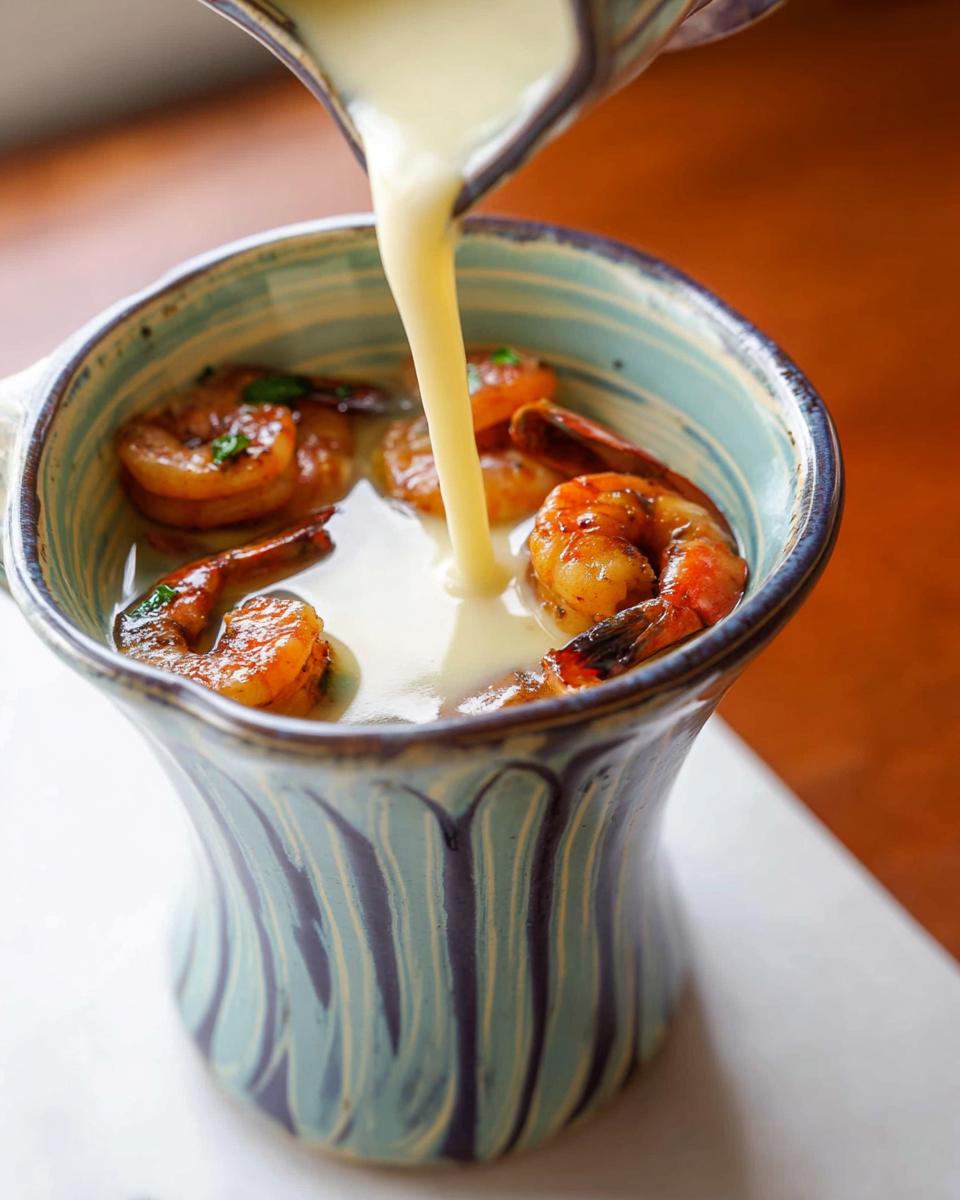
You noticed in the ingredients list that we use cold, cubed butter at the very end, right? This technique is called *monter au beurre*, and it’s the key to a shiny, professional-looking Champagne Cream Sauce for Seafood. This step MUST happen off the heat! Seriously, turn the burner off, or even briefly move the pan to a cool burner element.
Why cold? Cold butter emulsifies much better than room-temperature butter. Whisking in the cold cubes slowly helps thicken the sauce just enough without making it greasy, and it gives it that incredible, glossy sheen we associate with high-end sauces. Boiling the sauce after you add the final butter will cause the emulsion to break, leaving you with an oily mess instead of that velvety coating.
Never Boil the Cream Once Finished
Once the heavy cream has reduced sufficiently—meaning it coats your spoon and has concentrated its flavor—you are done with heat application, except for maybe keeping it warm. If you let that cream boil vigorously after it has thickened, you are playing a dangerous game! Boiling heavy cream at high heat can cause the proteins to separate, which results in a grainy or curdled sauce. I always aim to keep the final sauce just below the simmer point (around 180°F) until it’s time to serve. If you need to hold it for a few minutes, put the pan on the lowest warm setting on your stove, not a direct high heat source!
Ingredient Substitutions for Your Champagne Cream Sauce
Every great cook knows that life happens, and sometimes you’re halfway through setting up to make a gorgeous Champagne Cream Sauce and realize the wine rack is looking a bit bare! Don’t panic and definitely don’t scrap the whole idea, because this recipe has some wonderful flexibility. While I truly believe using Champagne sets the standard for brilliance, you can absolutely pivot to something equally delicious if you need an alternative for either the wine or the rich creaminess.
When you’re looking to make these swaps, the main thing to remember is the role that ingredient plays. Is it adding acidity? Texture? Richness? Understanding that helps you pick the right replacement. If you want more ideas on creamy dishes that are easy to pull off, check out my light and creamy salmon pasta—it’s always a winner!
Swapping Out the Champagne
Since the Champagne provides acidity and that signature delicate bubble, we need a replacement that offers strong acidity and dryness. The absolute best substitute here is a good quality, dry, still white wine. I’m talking about a bottle of Pinot Grigio or a crisp Sauvignon Blanc. You’ll use the same amount—550 ml for the sauce reduction and 200 ml for the broth.
Now, if you’re cooking for kids or simply avoiding alcohol altogether, you can absolutely still achieve a beautiful result! My go-to substitute in those cases is sparkling white grape juice or sparkling apple cider. Here’s the catch, though: these alternatives have much more sugar than Brut Champagne. Because of that extra sweetness, you absolutely must compensate by boosting the acidity.
So, if you use cider or juice, make sure to add an extra 1/2 teaspoon of fresh lemon juice in with the shallots before you start the reduction. This extra punch of tartness helps balance the final Seafood Sauce so it doesn’t taste overly sweet.
Alternatives for Double (Heavy) Cream
The heavy cream is there for luxurious mouthfeel and thickening power. If you’re out of double cream, the closest cousin in the dairy world is standard heavy whipping cream—they are often used interchangeably in cooking, so go ahead and use that instead! It should yield nearly identical results for your Pan Sauce.
If you want something with a little more tang, or perhaps a slightly lighter texture while still being rich, crème fraîche is fantastic. Crème fraîche is cultured cream, so it has a natural, subtle sourness already built-in, which actually complements the champagne reduction beautifully. You might notice the sauce is slightly less thick at the end, which is normal!
I would avoid using milk or half-and-half entirely unless you plan on adding significant flour or cornstarch slurry toward the end, as these lower-fat liquids simply won’t reduce down to that rich, coating texture required for a proper Cream Sauce presentation.
Serving Suggestions for Your Champagne Cream Sauce for Seafood
We’ve done the hard work—we simmered, reduced, strained, and emulsified until we have this gorgeous, glossy sauce ready to go. The million-dollar question now is: what shall we put this beautiful creation on? Honestly, since this Champagne Sauce is so bright yet decadent, it pairs beautifully with almost any delicate seafood. Don’t feel like you need a massive, dramatic dish to go with it!
When I first served this at that summer gathering, I paired it with something simple because I wanted the sauce to truly star. If you’re looking for quick weeknight inspiration that uses shrimp beautifully, you should check out the flavors in my Cajun Shrimp Tacos, though you could definitely top those tacos with a drizzle of richness instead of spicy mayo!
The Perfect Seafood Companions
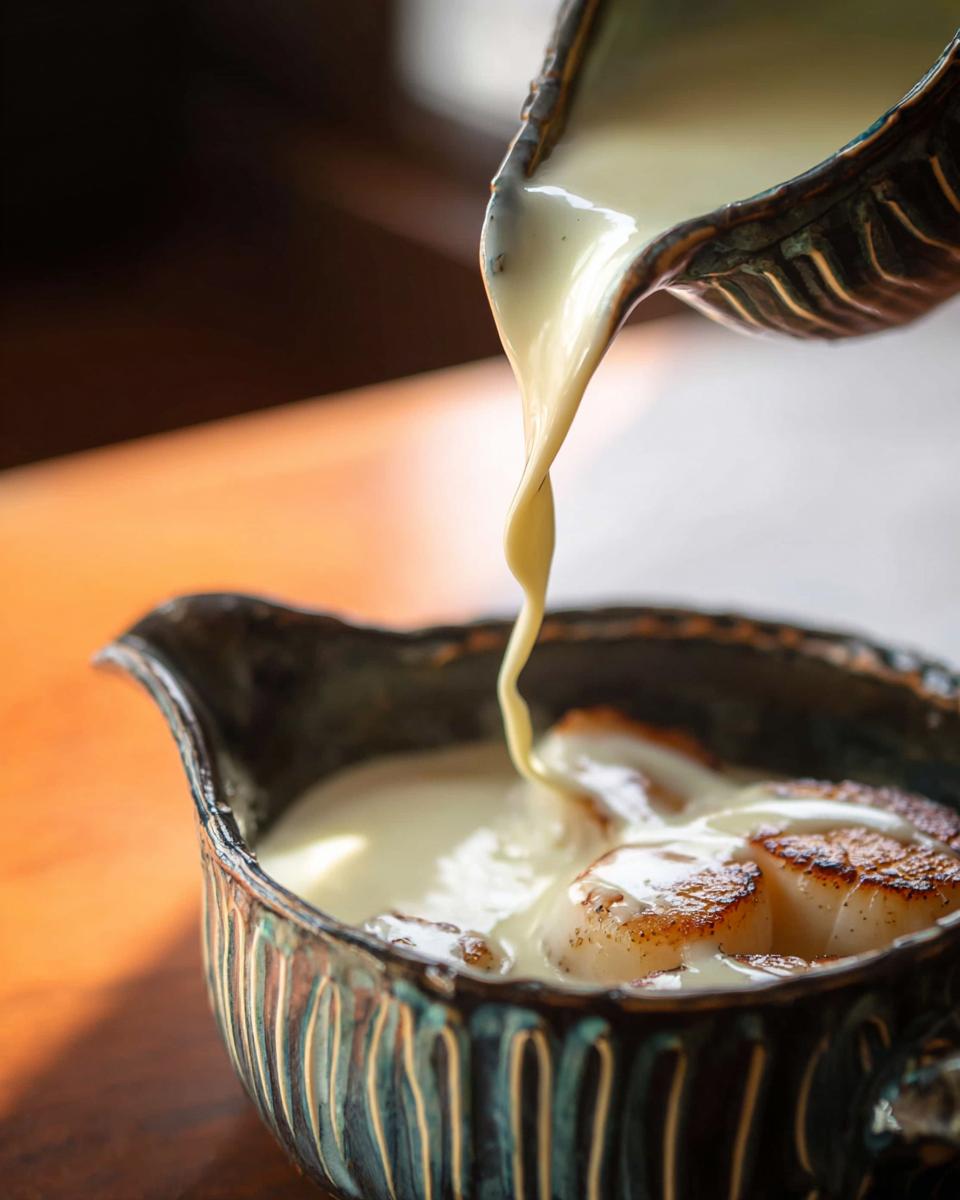
For a truly show-stopping meal, you cannot go wrong with shellfish. Freshly seared sea scallops are my number one choice. The way the slight caramelization on the scallop marries with the tangy, creamy sauce? It’s perfection. Make sure your scallops are patted completely dry before searing so you get a nice crust!
For white fish lovers, this is your moment. Use a firm, flaky fish that can stand up to the richness. Think baked or pan-seared halibut, cod, or sea bass. I prepare the fish simply—just salt, pepper, and maybe a sear in olive oil—and then pool the sauce around it, letting the fish soak up the flavor. Turbot is another incredible, slightly fancier option that works wonders with this Seafood Sauce.
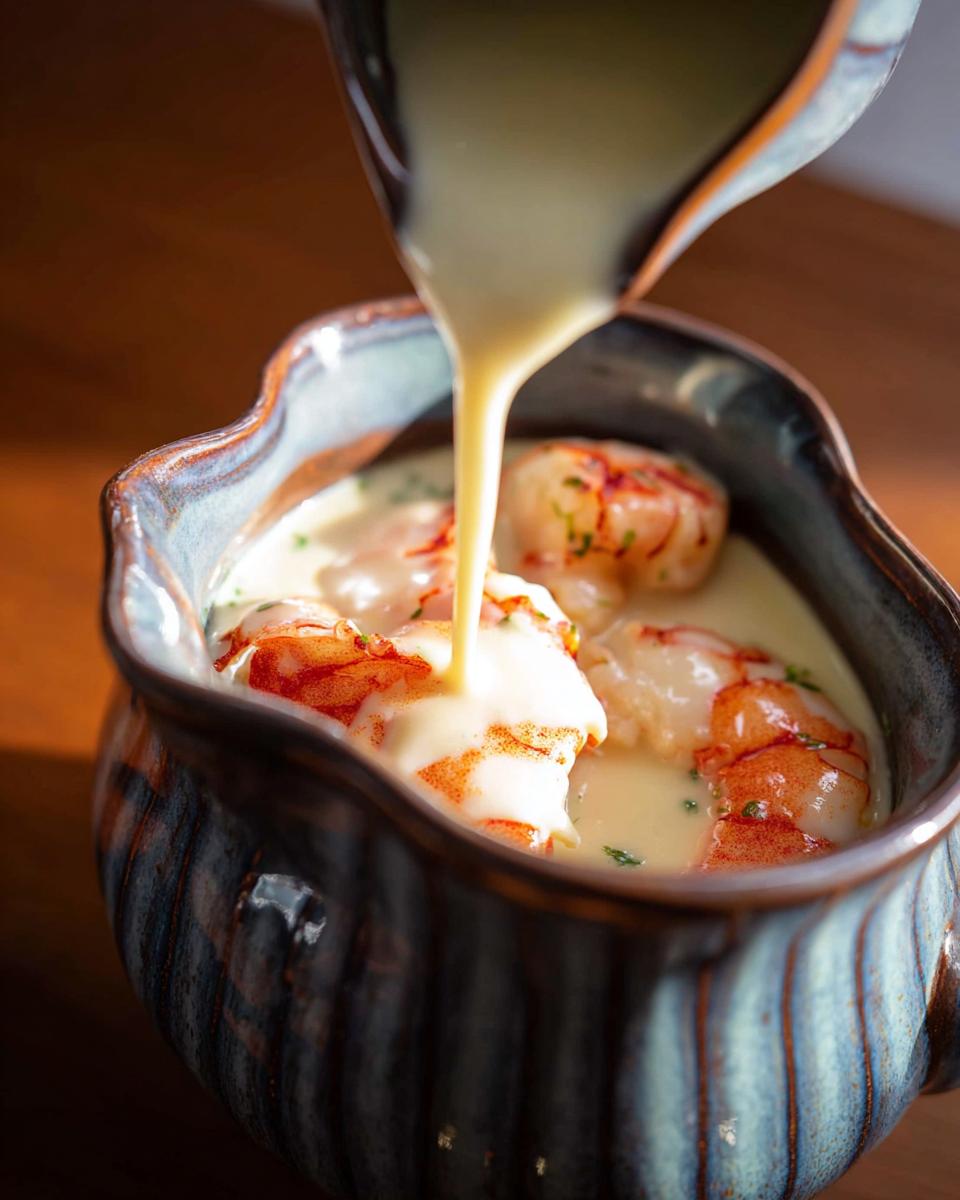
And let’s not forget lobster! If you’re making the effort for fresh lobster tails, this is the sauce they deserve. It transforms steamed or simply broiled lobster into a dish that rivals anything you’d pay top dollar for at a seafood restaurant. It works great over cold shrimp cocktail too, if you want a fun appetizer centerpiece!
Wine Pairing Suggestions
Since we used Champagne or dry white wine to make the sauce, the best pairing is almost always to stick with what you cooked with! It creates a lovely harmony where the sauce and the drink taste like they were made for each other.
I always suggest serving a chilled glass of the same Champagne or sparkling wine that you used in the recipe. If you went with a dry Pinot Grigio as a substitute, serve that! The cold bubbles and high acidity act as a built-in palate cleanser to cut through the richness of the cream base, keeping every bite of your seafood and sauce balanced. It’s the most elegant pairing you can offer!
Storing and Reheating Your Champagne Cream Sauce for Seafood
So, you made an amazing batch of Champagne Cream Sauce for Seafood, and perhaps you have a little left over—or maybe—just maybe—you planned on making extra because you know how good it is! Storing this sauce properly is important because cream sauces can be a little fussy. But don’t worry, with a couple of small steps, you can keep that beautiful flavor ready for your next piece of fish or maybe even some creamy pasta!
If you’re keeping this sauce for later, you’ll want to look at my tips on how to bake salmon from frozen—the sauce reheats just as beautifully on a weeknight when you need a quick, fancy dinner!
How to Store Your Sauce Safely
Since our Champagne Cream Sauce for Seafood relies on heavy cream, we need to be smart about chilling it. First things first: let the sauce cool down almost completely on the counter, but don’t leave it out for more than an hour or two, just to be safe with that dairy content. You want the sauce lukewarm, not steaming hot, before it goes into the fridge.
Transfer the sauce into a completely airtight container. A glass jar with a tight lid works great for me because I can see how much is left! You can safely store this sauce in the refrigerator for up to three days. Honestly, the flavor seems to deepen nicely overnight, but I wouldn’t push it past day four, especially because of the delicate nature of the wine reduction.
Reheating to Bring Back the Gloss
This is the tricky part! When you reheat a sauce that has been thickened with both reduction and butter, it often separates or gets incredibly thick—like thick pudding, not smooth sauce. If you try to reheat it quickly on high heat, you risk splitting the emulsion we worked so hard to create with that cold butter in the final step. Don’t get mad if this happens the first time you reheat it!
My method is always low and slow. Place the sauce in a small saucepan over the absolute lowest heat setting your stove offers. If it seems too thick—and it probably will—you need to ‘loosen’ it up slowly. Do not just dump in cold milk! Instead, whisk in a tablespoon of **warm** liquid at a time. This can be a splash of warm water, a tablespoon of warm fish stock, or even warm milk if you have it. Whisk constantly and gently as the warm liquid slowly reintroduces the necessary moisture without shocking the cream and butter mixture.
Keep stirring until the Champagne Cream Sauce for Seafood loosens up to that lovely, pourable consistency again. Once it’s hot through—but critically, **not boiling**—take it off the heat immediately. If it still looks like it needs a little boost of shine, whisk in one tiny cube of fresh, cold butter right at the very end, just like we did when we first made it. That little final whisk restores the incredible gloss!
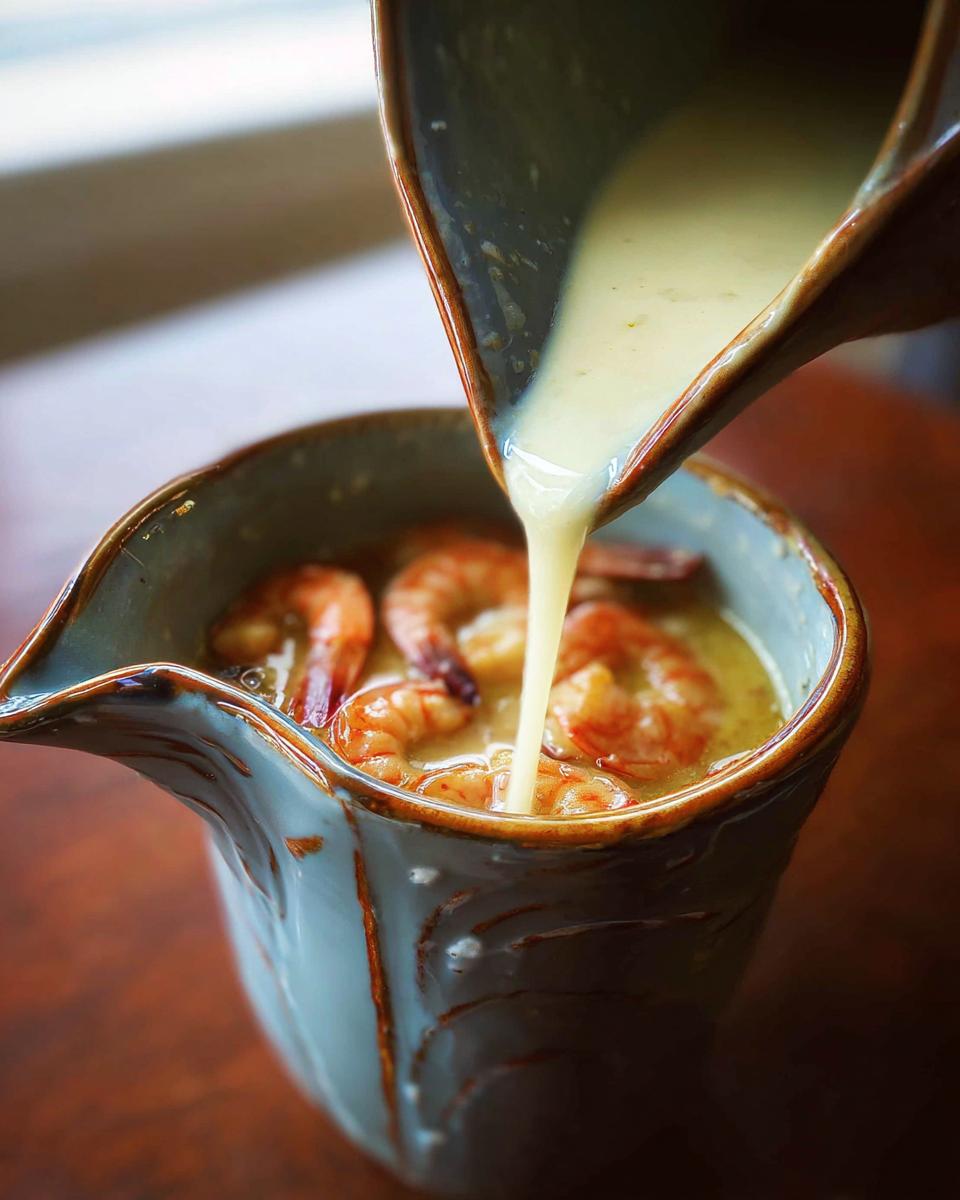
Frequently Asked Questions About This Champagne Sauce
It’s funny how once you start making sauces from scratch, you realize just how many little questions pop up! Even though this Seafood Sauce is straightforward, mastering the technique unlocks so many other culinary possibilities. I gathered a few questions I always hear from folks trying this recipe for the first time. Hopefully, these clear things right up so you can get cooking!
If you make this sauce and serve it with mashed potatoes, you might want to check out my recipe for creamy garlic shrimp—it’s a powerhouse pairing!
Can I prepare the fish bone broth ahead of time?
Yes, absolutely! Making the broth ahead of time is actually my favorite strategy for making this recipe feel so fast later on. The broth can be made up to three days in advance. You’ll cook it, strain it, let it cool, and then skim off the fat that rises to the top once it chills completely in the fridge. Having that rich foundation ready means the actual Pan Sauce creation part takes less than 20 minutes!
What is the best type of Champagne to use?
When selecting your bubbly, remember that you are using it for two different things. For the initial broth simmer, you can use a budget-friendly Brut—anything dry is fine because it’s just adding subtle aromatics. However, for the main reduction phase of the Cream Sauce, I highly recommend using the best Brut Champagne you can comfortably afford, or at least a very crisp, dry Prosecco or Cava. You want those notes of dryness and acidity, not sweetness. Avoid anything labeled ‘Demi-Sec’!
My sauce broke when I tried to reheat it—what went wrong?
Oh, the dreaded broken sauce! This usually happens for two reasons when dealing with a rich Seafood Sauce like this: either the heat was too high during reheating, or you didn’t add enough liquid to loosen it. When the butter breaks away from the liquid, it looks oily. The key is slow reheating on *very* low heat while whisking in a warm liquid tablespoon at a time until it comes back together beautifully. Never boil it once it splits!
Can I use store-bought stock instead of making the broth?
You certainly *can*, and it will save you a lot of time! If you use store-bought stock, you should aim for a high-quality **fish stock** if possible. If you can only find shellfish stock, use it, but add about 1/4 cup of dry white wine to the stock before you start Step 6 (adding the stock to the champagne reduction). Store-bought options often lack the depth we get from simmering our own bones, so you might need to add a tiny pinch more salt to ensure your final Champagne Sauce isn’t just creamy, but flavorful!
How thick should the final sauce be?
The perfect consistency for this sauce is called *nappé*, which means it should lightly coat the back of a spoon. When you pull your spoon across the center, the line should hold its shape for a second before the sauce slowly flows back together. You should not be able to pour it like water; it should offer a little resistance. Remember, the cold butter swirl finishes the texture, so make sure the sauce has reduced enough *before* you whisk in that final butter!
Share Your Experience Making This Champagne Cream Sauce for Seafood
I truly hope that trying your hand at this elegant Champagne Cream Sauce for Seafood makes you feel like the kitchen wizard I know you are! There is something so rewarding about mastering a sauce that tastes this incredible. This isn’t just recipe following; it’s true cooking confidence building!
Now that you’ve whisked and simmered your way to perfection, I desperately want to hear about it. Did you pair it with lobster or halibut? Did you manage that perfect glossy finish? Please leave a rating for the recipe below—it helps other home cooks see just how approachable this dish is for their next big event. And if you have any special pairing ideas or tweaks that worked for you, share them in the comments down below! I love seeing how everyone brings their own spin to my favorite dishes. You can always reach out directly through my contact page if you have a longer question!
Share Your Experience Making This Champagne Cream Sauce for Seafood
I truly hope that trying your hand at this elegant Champagne Cream Sauce for Seafood makes you feel like the kitchen wizard I know you are! There is something so rewarding about mastering a sauce that tastes this incredible. This isn’t just recipe following; it’s true cooking confidence building!
Now that you’ve whisked and simmered your way to perfection, I desperately want to hear about it. Did you pair it with lobster or halibut? Did you manage that perfect glossy finish? Please leave a rating for the recipe below—it helps other home cooks see just how approachable this dish is for their next big event. And if you have any special pairing ideas or tweaks that worked for you, share them in the comments down below! I love seeing how everyone brings their own spin to my favorite dishes. You can always reach out directly through my contact page if you have a longer question!
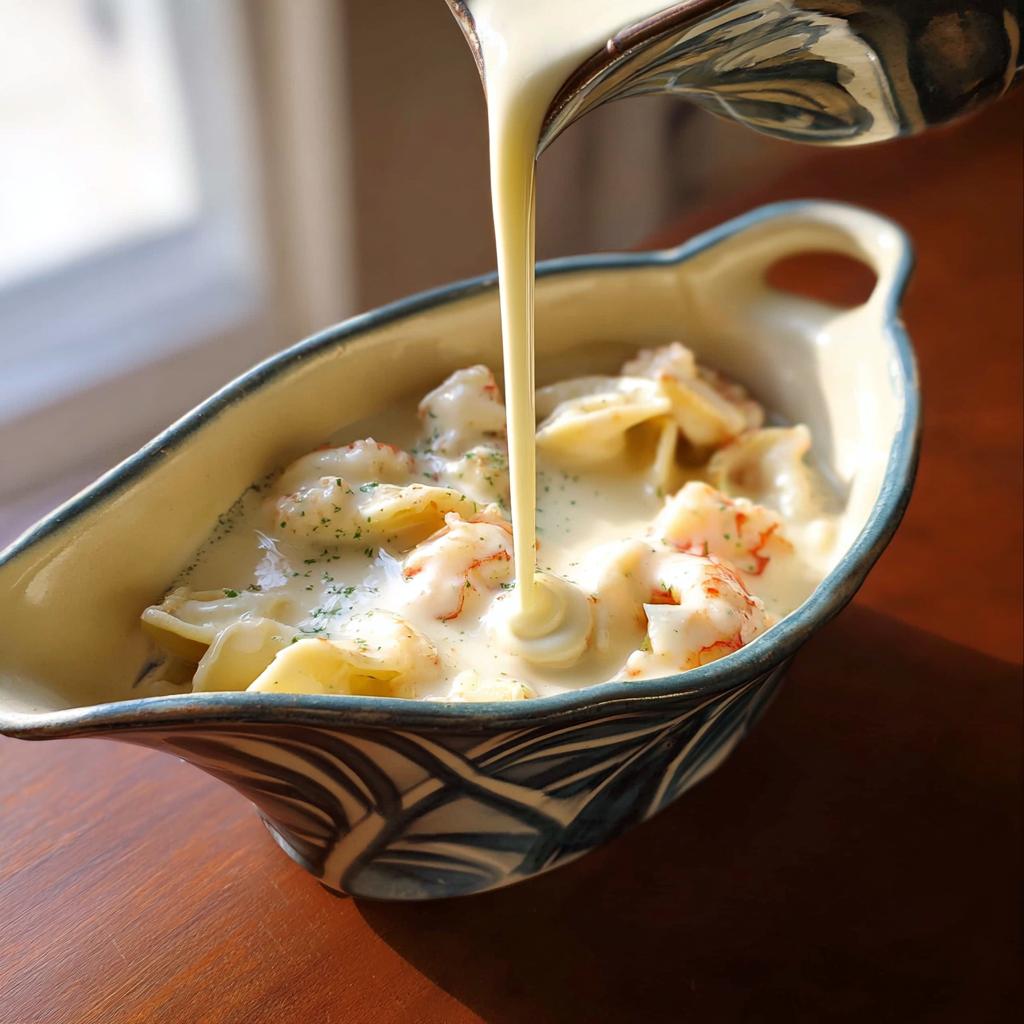
Champagne Cream Sauce for Seafood
Ingredients
Equipment
Method
- For the fish bone broth: Place fish bones in a large saucepan. Add quartered onion, roughly chopped celery, halved lemon, bay leaf, parsley, salt, and peppercorns.
- Pour in water and champagne. Bring to a simmer and cook for 30 minutes.
- Remove from heat. Strain the broth through a sieve lined with muslin cloth into a bowl or jug. Let it settle, then skim off any residue from the top.
- For the champagne cream sauce: Finely dice the shallot.
- Heat butter in a saucepan over medium heat. Add the shallot and gently fry until softened.
- Pour in the champagne and bring to a gentle boil. Reduce the liquid by one-third.
- Add the fish stock and cream. Bring back to a boil and reduce the liquid by half.
- Season the sauce with salt and pepper.
- Sieve the sauce to remove the shallot. Return the sauce to the pan and heat gently until just below simmering point.
- Turn off the heat and whisk in a few extra cubes of cold butter until the sauce is smooth and glossy. Serve immediately.
Nutrition
Notes
Tried this recipe?
Let us know how it was!
Precision Keto Scientist
Numbers don’t lie, and neither do my recipes. I’m a biochemist who fell into keto cooking through my own metabolic research—and I approach recipe development like a lab experiment, complete with macro calculations precise to the tenth of a gram.
My journey started in diabetes research labs at Johns Hopkins, where I spent six years studying how different macronutrient ratios affected insulin sensitivity. Personal experimentation with therapeutic ketosis for cognitive enhancement led me down a rabbit hole of recipe testing that eventually consumed more hours than my actual day job.
While other cookbook authors describe flavors and textures, I quantify ketone elevation curves and glycemic impact data. My recipe database contains 340+ formulations, each tagged with detailed nutritional analysis, predicted ketosis timing, and optimal meal spacing. I measure salt by weight, time cooking processes to the minute, and log ingredient sourcing obsessively for consistent results.
My breakthrough research on fat-protein ratios for sustained ketosis got published in the Journal of Nutritional Biochemistry. My “Macro Math Mastery” workshops have trained over 5,000 people in precision meal planning. I even collaborated with continuous glucose monitor manufacturers to create the first real-time feedback system for recipe optimization.
I left my pharmaceutical research position at Merck three years ago to focus on metabolic nutrition consulting. Now I work with professional athletes, biohackers, and medical professionals seeking therapeutic ketosis protocols. When I’m not in my lab-kitchen, I’m competing in chess tournaments or documenting my daily biomarker measurements with true data scientist obsessiveness.
Cooking is just applied chemistry—and chemistry follows predictable rules. Master the variables, control the outcomes.