
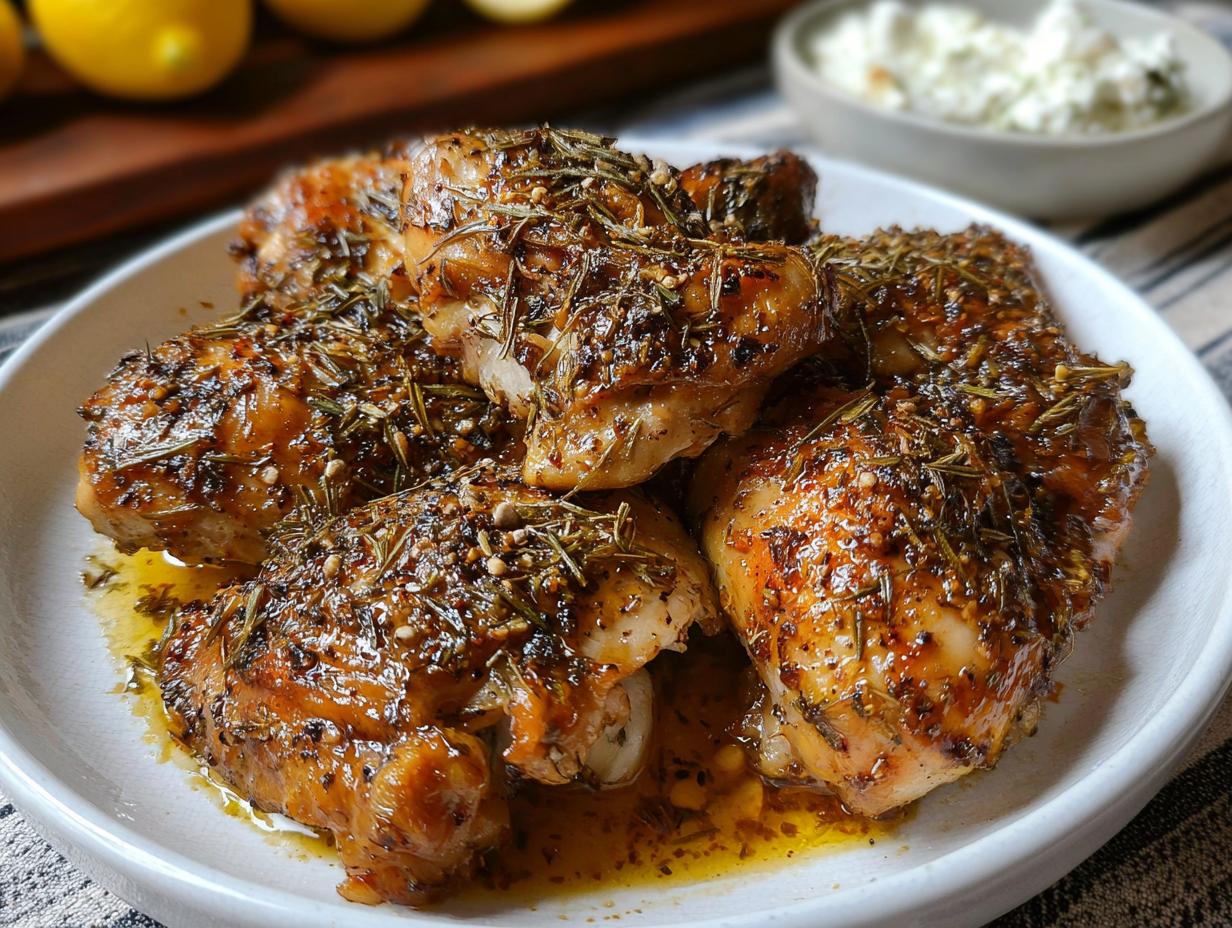
Oh, friends, there is nothing quite like the scent of a true Mediterranean kitchen! That bright, sharp hit of lemon mixed with earthy oregano just settles my soul. I’m Alexandra, and today I want to share my absolute favorite way to bring that sunshine onto your table with this fantastic Baked Greek Lemon Oregano Chicken. Now, this isn’t your typical oven roast; we use a special two-step method to guarantee the most unbelievably tender meat swimming in that tangy sauce. It’s my go-to for easy mediterranean dinners.
Just last month, I was fiddling around on my balcony garden—you know how I love finding flavors right here in the city—and inspired by some super fresh herbs I managed to coax out of the planters, I threw this chicken together. As it baked, the aroma took me right back to my childhood summers. Cooking this dish always reminds me that the best flavors come from simplicity and sharing, which is why I absolutely adore this greek chicken recipe.
If you’re looking for maximum flavor with minimal fuss, this is it. You’ll find the full recipe rundown below, but trust me when I say this technique guarantees a juicy result every single time. See how easy it is to make amazing, flavorful food? I even included my favorite resource for leveling up any home-cooked meal when you’re ready to explore new ingredient pairings, over here: your ultimate dinner ideas guide!
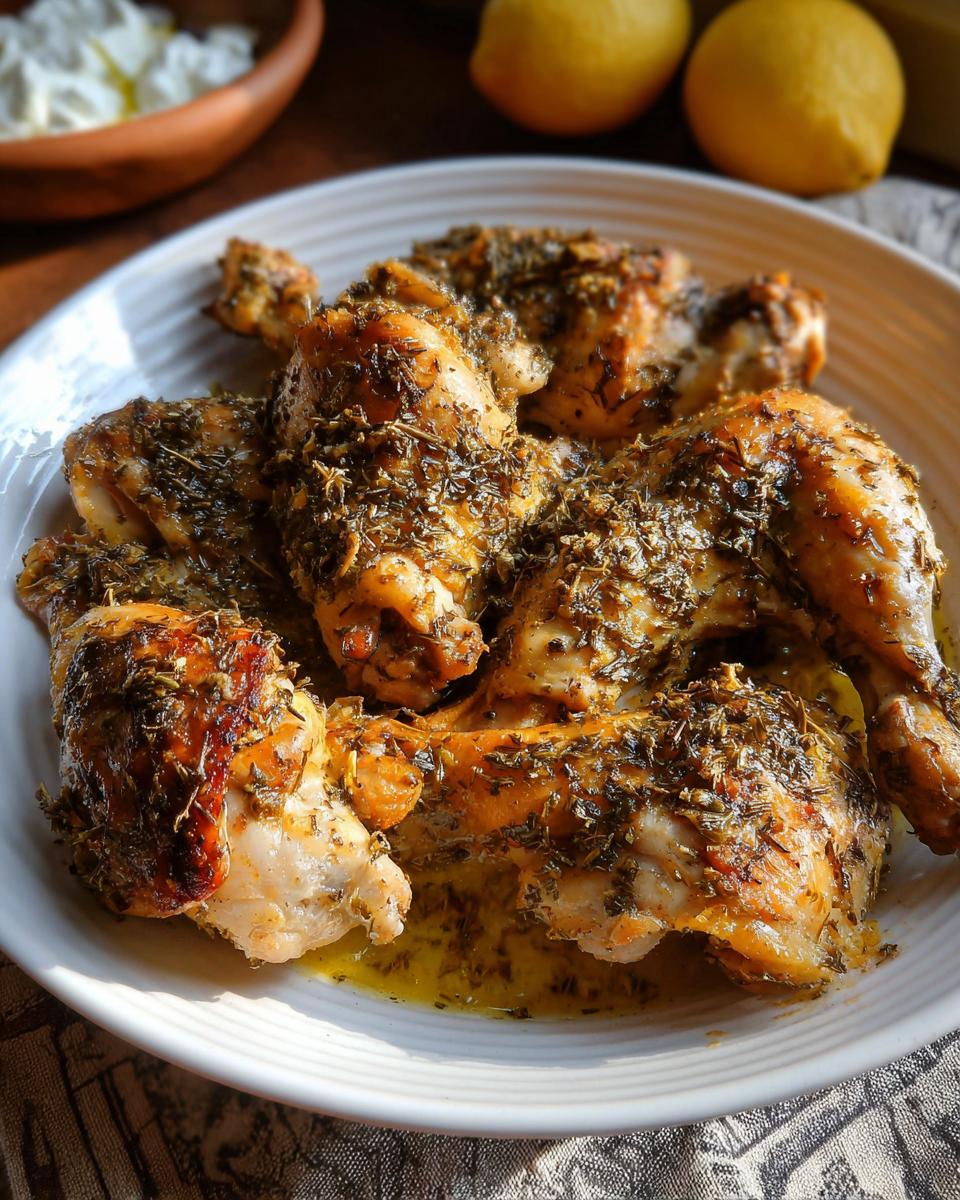
Why You Will Love This Baked Greek Lemon Oregano Chicken
Seriously, once you try this method, you might put away your standard oven mitts for good! This recipe takes simple ingredients and turns them into something that tastes like it came straight from a taverna patio. It’s honest, bright food, and it fits right into a healthier lifestyle.
- It’s incredibly moist! The frying-then-braising technique locks in every drop of juice, making it way more flavorful than a standard simple roasted chicken.
- The flavor payoff is huge for minimal effort. That tangy lemon and aromatic oregano are just a match made in the Mediterranean heaven.
- This is fantastic for low-carb eating. Since we aren’t relying on heavy breading or sugary sauces, it keeps those macros friendly!
- We use very few ingredients—just pantry staples for a massive flavor boost. Check out these other amazing 5-ingredient dinners if you love speed!
- The sauce is non-negotiable. That leftover pan liquid is liquid gold; you absolutely must drizzle it over rice or potatoes—or just eat it with a spoon!
- It feels elegant enough for company but comes together so fast after work, clocking in at only 40 minutes total time.
Essential Ingredients for Baked Greek Lemon Oregano Chicken
Alright, let’s talk about what you need to pull off this amazing recipe. You’ll see we use both frying oil and then a little bit of the strained frying oil later for the sauce. Don’t panic about the amount of oil listed! It’s only used for pan-frying the skin until it’s golden, and the instructions clearly state you only need enough to create about a quarter-inch depth in your pan. It seems like a lot, but we strain most of it out!
Make sure your chicken pieces are cut up and bone-in, skin-on—that makes all the difference for flavor and moisture retention in this specific technique. We aren’t just baking; remember, we are braising in that beautiful sauce base afterward!
Ingredient Notes and Substitutions for Your Lemon Oregano Marinade
When it comes to oregano, please, please, please use true, *dry Greek oregano* if you can find it. It has this intense, piney flavor that’s miles ahead of the softer stuff you sometimes see in the shaker jars. Since we are focusing on that signature Mediterranean taste for our lemon oregano marinade, it’s worth hunting for the good dried leaves.
Also, that fresh lemon juice isn’t just for flavor; it’s the acid that helps tenderize everything! If you are absolutely out of fresh lemons, don’t use that bottled concentrate, please. Instead, use bottled lemon juice mixed with a tiny pinch of citric acid if you have it, or just substitute with white wine vinegar—but you’ll want to use slightly less, maybe half a cup, and taste test as you go, okay? We need that signature zing!
Equipment Needed for Baked Greek Lemon Oregano Chicken
You don’t need a ton of fancy gadgets for this amazing baked greek lemon oregano chicken, which is another reason I love pulling this recipe out on a busy weeknight. We need that initial high heat to get the skin gorgeous and golden, so the right pan is crucial.
First up, you absolutely must have a large, deep frying pan. I emphasize *deep* because we are using about a quarter inch of olive oil for that shallow fry. If your pan isn’t deep enough, the oil will splatter everywhere when you add the chicken, and trust me, nobody wants that mess! This initial browning step is key to locking in flavor, and a deep pan lets the chicken sit nicely without overcrowding.
Once everything is beautifully browned, we move the chicken into a large pot or maybe even a wok for the braising part. Make sure it’s big enough to hold all your chicken pieces without squishing them down once the lemon-water sauce goes in.
Finally, just a regular small bowl for whisking together the lemon juice and flour is all you need for the sauce thickener. That’s it! You can find some fantastic tips on making sure your weeknight cooking always runs smoothly over at this guide on foolproof dinner ideas if you want to prep like a pro!
Step-by-Step Instructions for Baked Greek Lemon Oregano Chicken
Okay, this is where the magic happens! The technique is everything here because we are going from pan-fried crispness right into a slow, tender braise. Don’t rush the browning part; it builds the base flavor for the entire dish! If you want that juicy meat paired with amazing sauce, just follow these steps closely. We’re aiming for about 35 minutes of total cooking time, so get organized!
-
Preparing the Chicken and Lemon Oregano Marinade Base
First things first: get that chicken bone-dry! Grab some paper towels and pat every single piece down really well. Moisture is the enemy of nice browning. Then, rub each piece lightly with a little olive oil—that helps the spices stick. Now for the seasoning step that sets up our fantastic baked greek lemon oregano chicken flavor: hit those pieces all over with salt, pepper, and that gorgeous dry Greek oregano. Give it just a minute or two to start soaking in while you heat the oil.
-
Next, pour your olive oil into that deep frying pan—remember, about 1/4 inch deep—and get it heating over medium heat. We want it hot, but not smoking!
-
Browning and Sauce Preparation for Your greek chicken recipe
Time to fry! Start skin-side down for about 4 to 5 minutes until it’s that beautiful golden brown—don’t skip this! Then flip and cook the other side for 3 to 4 minutes. If your pan is crowded, you have to cook these in batches; otherwise, the chicken will steam instead of brown. Transfer every browned piece carefully over to your big pot or wok. Now, take the oil you just used, strain it, and pour enough of it over the chicken in the pot to lightly cover the bottom.
In a small bowl, grab your lemon juice and whisk in the flour until it’s completely smooth—no lumps allowed! Then stir in your water until it’s all combined into that simple but crucial slurry. Pour this over the chicken in the pot.
Cover the pot tightly, bring that liquid up to a boil, and immediately drop the heat down to medium-low. Let this simmer—or braise—covered for 20 to 25 minutes until the chicken is cooked perfectly through. Don’t forget to check out this guide for crispy food if you’re keen on maximizing texture in your mains!
When it’s done, serve everything immediately, making sure to spoon that amazing lemon-oregano pan sauce all over the juicy chicken. If you’re curious about other authentic Greek methods, this recipe from Mia Kouppa looks wonderful too: Chicken with Lemon and Oregano.

Tips for Perfect Baked Greek Lemon Oregano Chicken Every Time
Even though this recipe relies on simple methods, a few little tricks can take your Baked Greek Lemon Oregano Chicken from great to absolutely spectacular. Since we are doing that initial fry, temperature control and setup are huge. I learned these lessons the hard way after a few messy kitchens!
Here are my top tips for making sure your chicken comes out tender with the perfect amount of sauce clinging beautifully to it:
- For the best results, take your chicken pieces out of the fridge about 20 minutes before you plan to season and fry them. Letting the meat come up slightly closer to room temperature means it browns more evenly in the pan. Cold chicken hitting hot oil can seize up the outside too fast!
- When you are setting up that frying oil, measure it! Don’t just eyeball it. You need that 1/4-inch depth, as the recipe calls for, to ensure the skin makes consistent contact with the heat. If you don’t have enough oil, you end up steaming the chicken instead of getting that gorgeous, savory crust we need before braising.
- When we move to the braising stage in the pot, keep that heat low once it hits a boil. That low, steady simmer is what breaks down the connective tissues beautifully, making the meat fall-apart tender. If you boil it hard on low heat, the sauce can reduce too quickly and burn the bottom. You know it’s done when the internal temperature hits about 165°F, but visually, the juices should run clear when pierced near the bone.
If you want to avoid any mishaps next time and keep your meal planning stress-free, check out these tips on how to make dinner ideas foolproof! Happy cooking!
Serving Suggestions for Mediterranean Dinners
This Baked Greek Lemon Oregano Chicken is so bright and punchy that it sings when paired with simple, fresh sides. Since that lemon-oregano sauce is rich and deeply flavorful from the chicken fat and oil, we want sides that can soak up that gorgeous liquid but keep things feeling light for our mediterranean dinners.
Because we are always looking for low-carb, high-flavor options here, my first thought is always vegetables. You could easily roast some asparagus or maybe some green beans sprinkled heavily with sea salt and a drizzle of olive oil. They only take about 15 minutes, and that crunch is the perfect texture contrast to the fall-off-the-bone chicken!
If you’re feeling like you need something a little more substantial under that incredible sauce—and you’re not strictly low-carb that night—a simple bed of fluffy rice or maybe some creamy mashed potatoes would be divine for soaking up every last drop. If you need to whip up a side dish fast, check out my thoughts on quick 20-minute dinner ideas; some of those vegetable sides are super speedy!
But honestly, my favorite pairing is a big, simple Greek salad. Just sliced cucumbers, tomatoes, maybe some thinly sliced red onion, and a light vinaigrette made with red wine vinegar and good olive oil. Keep it simple! The natural acidity of the salad veggies cuts right through the richness of the broth, making every bite feel fresh. It’s practically mandatory for a true Greek experience!
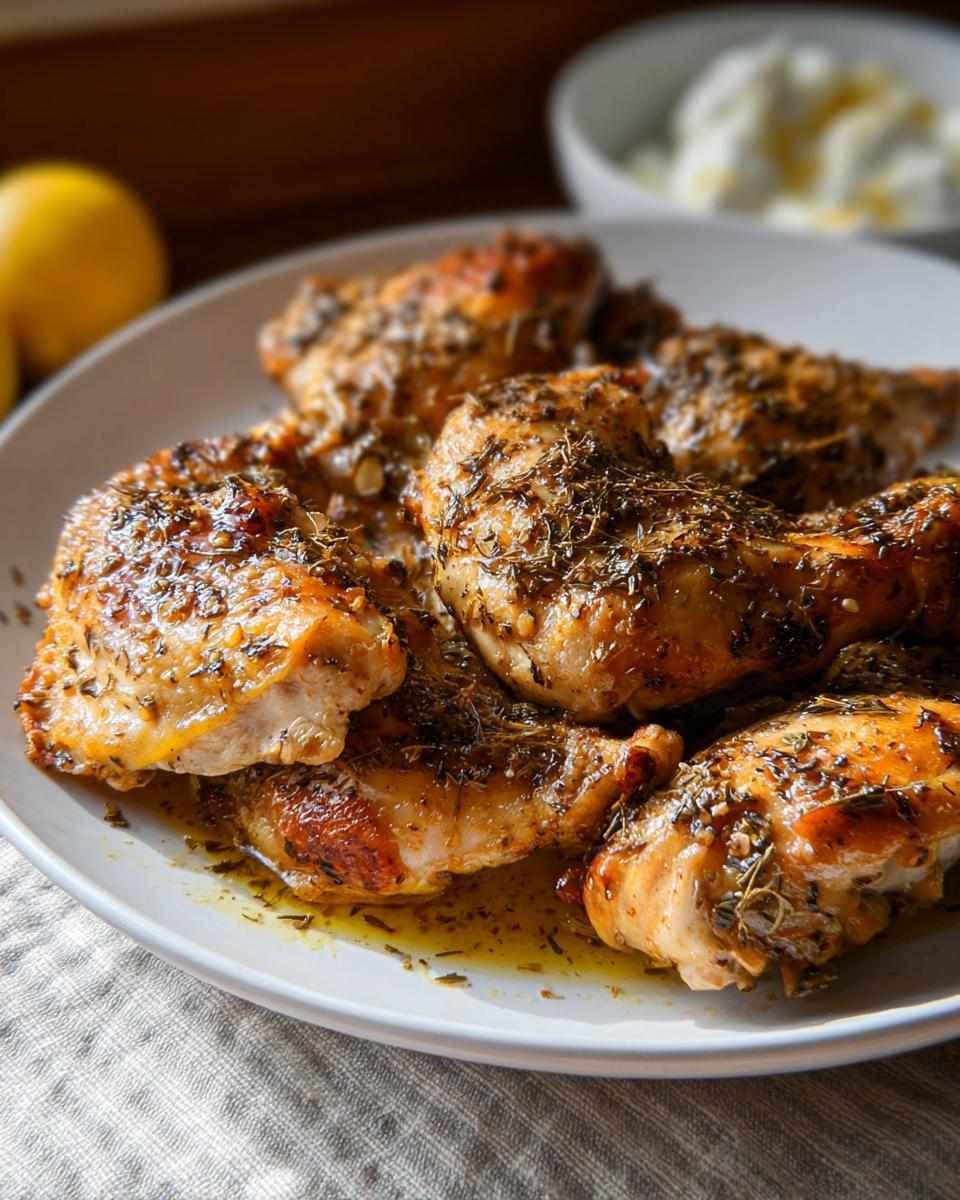
Storage and Reheating Instructions for Baked Greek Lemon Oregano Chicken
This chicken is just as delicious the next day, which is great because fighting over the leftovers is half the fun, isn’t it? Since this whole recipe is about moisture—that tender meat and the beautiful sauce—we need to be gentle when we reheat it so we don’t dry everything out.
First, make sure you are storing it correctly. Once the chicken has cooled down a bit, transfer the meat pieces and any remaining sauce into an airtight container. You really want to keep the sauce with the chicken because that liquid is your humidity shield! You can safely keep this in the refrigerator for about three to four days. Any longer than that, and I start getting nervous, even though technically it might last longer.
Now, for reheating, forget the microwave if you can—it tends to turn tender chicken rubbery really fast! My absolute favorite way to bring this baked greek lemon oregano chicken back to life is on the stovetop.
Just take the amount you want to eat and place it back into a small saucepan—the meat *and* the sauce. Heat it slowly over low to medium-low heat. Make sure it’s on a gentle simmer and cover the pan. This slow warmth allows the chicken to gently absorb the moisture from the sauce as it heats up, keeping that great tenderness we worked so hard to achieve in the first place. It usually takes about 8 to 10 minutes to get piping hot all the way through.
If you are in a real pinch, the microwave works, but you have to be smart about it. Zapping it in short, 30-to-45-second bursts is better than nuking it for two full minutes straight. And always, always add a tiny splash of water or extra lemon juice to the sauce before microwaving to help create steam!
Nutritional Snapshot for Baked Greek Lemon Oregano Chicken
Now, I know so many of you lovely cooks are keeping sharp tabs on your macros and calorie intake, and I completely get it! When you’re cooking with olive oil and flavorful bone-in chicken like we are here, it’s important to know what you’re working with. This recipe gives you an incredible burst of authentic flavor while staying wonderfully clean and low-carb, which is perfect for those focused on healthy mediterranean dinners.
Keep in mind, these numbers are based on the specific single serving used in the recipe testing—one piece of chicken and a measured amount of the final sauce—so they are estimates. If you use more olive oil for frying, or if your chicken piece is much larger than average, of course, those figures will shift!
Here is the general breakdown:
- Calories: Approximately 459 kcal
- Fat: Around 43g (Remember, that’s mostly healthy monounsaturated fat from the olive oil!)
- Protein: About 18g
- Carbohydrates: Less than half a gram! Yes, you read that right. This is super low-carb friendly.
It’s truly fantastic how much rich flavor we get for such a modest calorie count, especially since we are getting great protein and healthy fats. This is proof that you don’t have to sacrifice taste when you’re eating smartly. For more ideas on how to nail those calorie-smart meals without losing satisfaction, you should definitely take a peek at this resource on calorie-smart cooking trends!
This recipe just keeps proving itself as a winner for quick, lean dinners. It’s satisfying, bright, and lets those beautiful fresh herbs really shine!

Frequently Asked Questions About Baked Greek Lemon Oregano Chicken
I always get questions when people see this two-step method for the first time! It looks a little different from your standard simple roasted chicken, but trust me, the frying step is what makes this greek chicken recipe so incredibly moist. Here are some of the things I hear most often from folks trying this dish for the first time!
Can I use chicken breasts instead of bone-in pieces for this Baked Greek Lemon Oregano Chicken?
You absolutely can swap! Chicken breasts are leaner and cook faster, which means you have to be super careful not to dry them out during that braising stage. Since breasts are generally thicker and don’t have a bone helping regulate the heat, I would suggest reducing that final simmering time by maybe 5 to 8 minutes. Also, since breasts are less fatty than bone-in thighs, you might want to check on them sooner than the 20-minute mark. If you use breasts, you absolutely need that beautiful lemon oregano marinade base to keep them hydrated, so don’t skip the sauce!
What is the best way to achieve a crispy skin if I prefer a simple roasted chicken texture?
That’s a great question! Because this recipe emphasizes braising for tenderness, the skin ends up soft because it’s sitting submerged in sauce. If you want that crackly, simple roasted chicken skin texture instead, you’ll need to skip the braising step completely. After you brown the chicken skin-side down (Step 3), instead of transferring it to a pot, stick the pan right into a hot oven (about 400°F) and roast it until the internal temperature is right. You’d skip the lemon-flour sauce entirely, maybe just basting a couple of times with the leftover oil and some lemon juice, but know that the final result will be different—less saucy, but definitely crispier!
What are the best herbs for Greek lemon chicken besides oregano?
Oregano is the superstar here, without a doubt, but if you want to layer in some depth to your lemon oregano marinade, I highly recommend tossing in a little bit of dried thyme or perhaps some dried marjoram, too. Thyme brings a lovely earthy note that complements lemon so well. A pinch of dried rosemary is nice, but use it sparingly—rosemary can really take over! Dill is traditional in some Greek cooking, but I usually reserve that for fish or potato salads, keeping the chicken focused on that pungent oregano flavor.
Why do I need to fry the chicken before I bake it?
Skipping the initial frying is the biggest mistake people make with this recipe! We aren’t just frying to cook it; we are developing what the chefs call the Maillard reaction—that browning creates hundreds of new flavor compounds that you just can’t get by boiling or baking alone. Those browned bits on the skin and in the pan turn into the bedrock of flavor for the sauce later on. Without that step, you end up with pale, bland chicken swimming in thin, lemony water instead of a rich sauce. It’s crucial for these mediterranean dinners!
If you are looking to explore even more of my favorite recipes and essential cooking techniques, head over to my main recipe index right here: See all my favorite recipes!
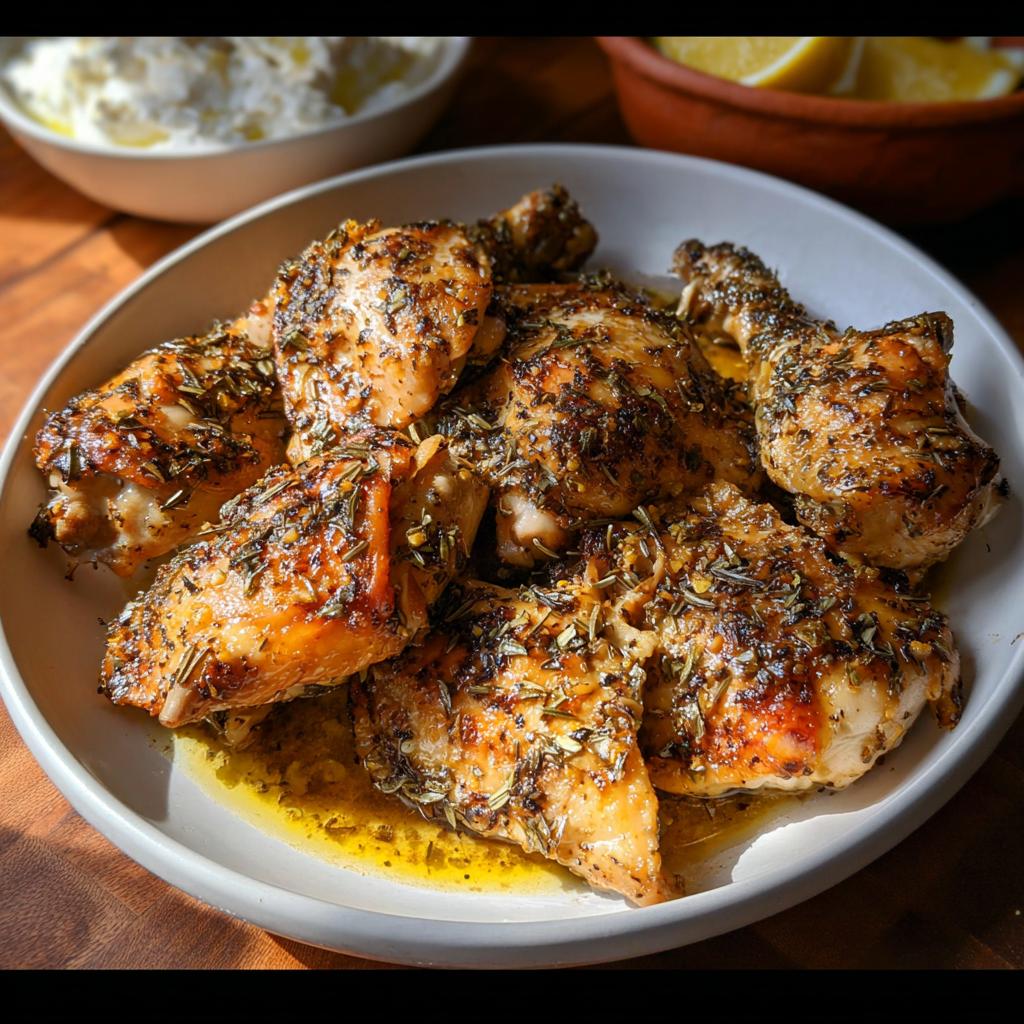
Baked Greek Lemon Oregano Chicken
Ingredients
Equipment
Method
- Pat the chicken dry on all sides with a paper towel. Rub the chicken on all sides with a little bit of olive oil. Sprinkle the salt and pepper all over the chicken pieces, followed by the oregano. Set aside for a few minutes.
- Pour olive oil into a large, deep frying pan. Heat the olive oil on medium heat.
- Begin frying your chicken pieces until they are browned on all sides. Start by frying skin side down for 4-5 minutes until the skin is golden brown. Turn and cook the other side for 3-4 minutes. You may need to brown your chicken in two batches.
- Transfer the browned chicken to a large pot or wok.
- Strain the oil that you used to fry the chicken, and pour it over the chicken in the pot.
- In a small bowl whisk together the lemon juice and the flour until there are no clumps. Add in the water and stir to combine. Pour this mixture over the chicken.
- Cover your pot and bring the liquid to a boil. Reduce the heat to medium-low. Cook for 20-25 minutes or until your chicken is cooked through.
- Serve your chicken with the sauce from the pot poured over it.
Nutrition
Notes
Tried this recipe?
Let us know how it was!
Urban Forager & Hyperlocal Ingredient Specialist
My Brooklyn apartment balcony tells my story: vertical gardens packed with wild edibles, fermentation crocks bubbling with city-foraged greens, and the constant hum of dehydrators preserving herbs I’ve collected from unexpected urban corners. What started as weekend escapes to my aunt’s upstate farm during my Columbia botany studies turned into something bigger after I earned my Urban Ecology Master’s from The New School.
Instead of following traditional academic paths, I discovered that cities are actually amazing edible ecosystems—rooftop weeds, park-edge wild greens, vacant lot treasures that perfectly complement keto eating. Who knew that some of the best low-carb foods were growing right under our noses in Manhattan?
My recipe collections celebrate city seasons: spring dandelions and plantains, summer purslane from rooftops, autumn rose hips from community gardens, winter wild onions and cress. I’m certified through the New York Mycological Society and trained by Brooklyn Botanic Garden to forage safely and ethically. Over 180 of my recipes feature at least one urban-foraged ingredient—from sidewalk plantains to sumac berries and wild mint thriving in vacant lots.
My “Metropolitan Wild” column went viral after my dandelion coffee substitute hit social media. Now my weekend “Urban Wild Walks” through Central Park and Prospect Park sell out faster than I can schedule them. I teach city dwellers to spot safe, keto-friendly wild foods hiding in plain sight.
Currently, I’m partnering with local chefs to bring urban foraged elements to restaurant menus and developing an app that maps safe foraging spots across all five boroughs. Evenings find me tending my sourdough starters, pressing flowers for natural dyes, or weaving baskets from willow branches I collect during park maintenance.
Cities are wild food sanctuaries hiding in plain sight—keto eating becomes urban rebellion when you realize how much free, perfect nutrition grows right under our feet.