
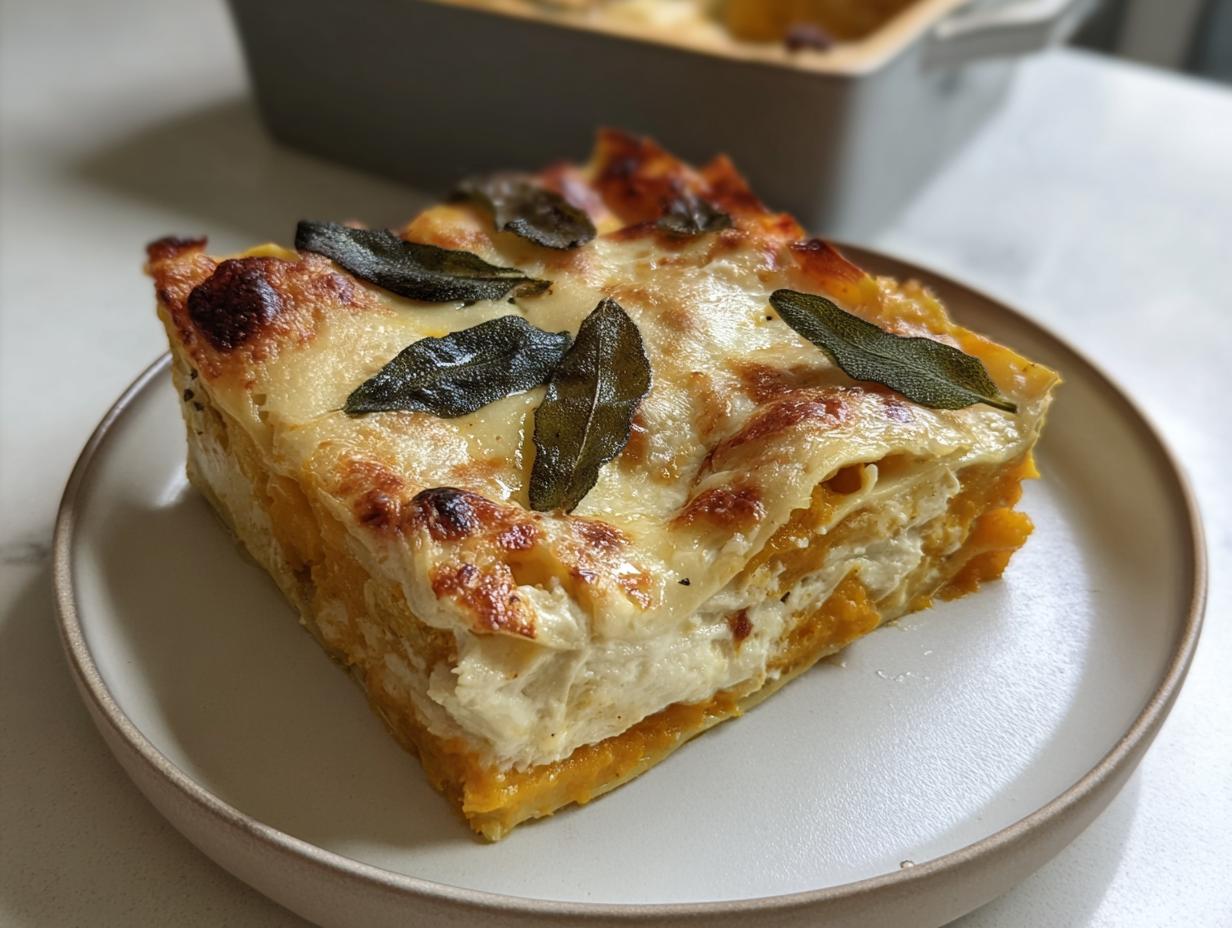
When that first chill hits the air, you know it’s time to ditch the light summer dishes and dive deep into comfort food that actually feels *satisfying*. That’s exactly what led me to perfect this rich, deeply flavorful Butternut Squash and Sage Lasagna recipe. Trust me, this isn’t your standard pasta bake; it’s layered indulgence that screams autumn celebration. It all started during a chilly afternoon experiment when I was calibrating flavors for my ketogenic diet—every component needed to be perfect!
I was layering the creamy squash puree with nutty Parmesan, determined to create something impressive for friends while keeping my macros in check. Seeing their faces when they tasted that savory, earthy lasagna proved to me that thoughtful cooking can bring everyone together, diet constraints or not. You’re going to love this!
If you’re looking for more successful culinary experiments, check out my main recipe index here: my full collection of recipes.
Why This Butternut Squash and Sage Lasagna is a Must-Make Fall Lasagna Recipe
If you’re looking for that show-stopping centerpiece for your next gathering, this is it! Forget the heavy meats; this fall lasagna recipe proves just how incredible vegetarian food can taste. It’s hearty, rich, and brings all those beautiful autumn flavors right to your table. This is genuinely the perfect vegetarian holiday main.
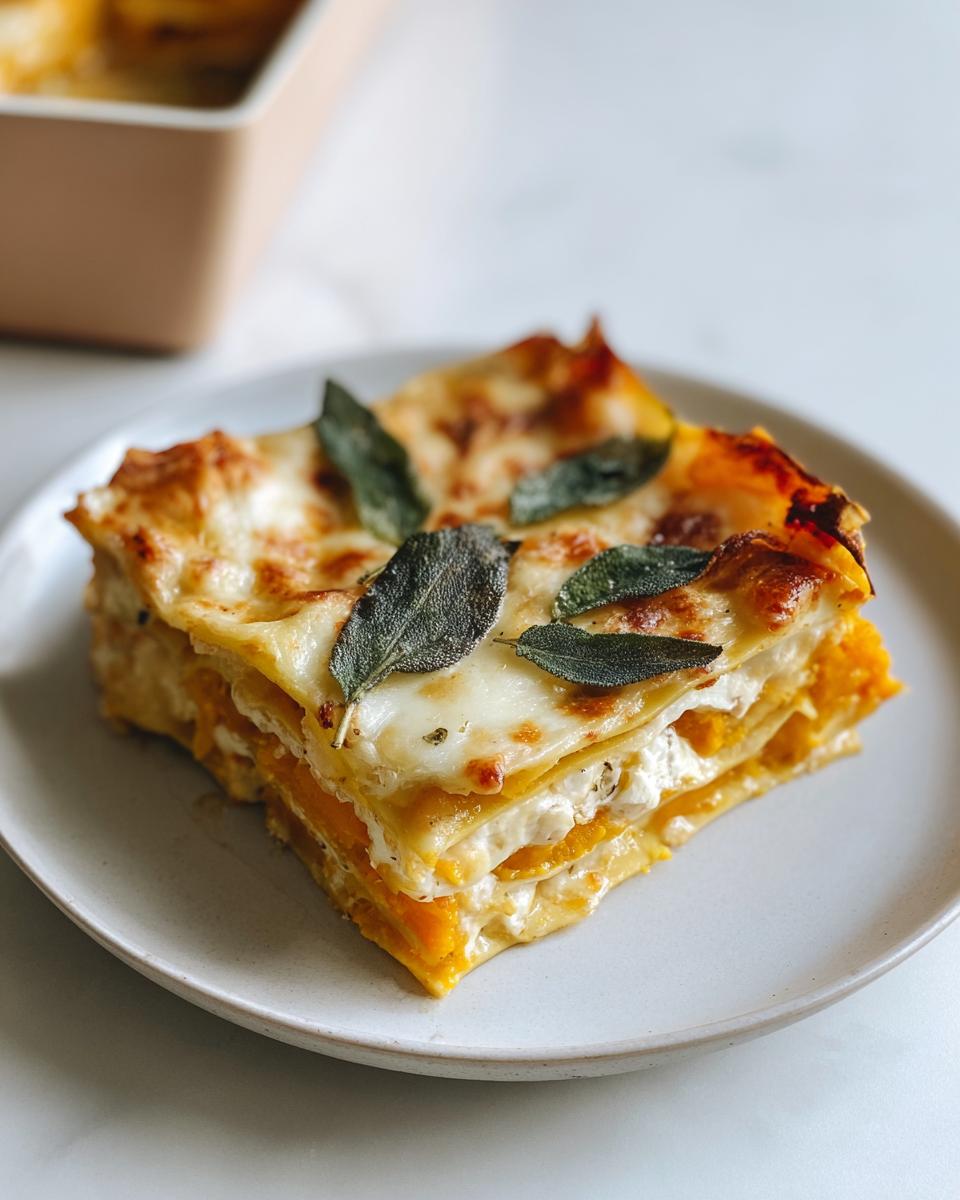
- It uses natural sweetness from roasted squash, cutting down on the need for added sugar.
- The earthy, aromatic sage paired with browned butter makes the sauce unforgettable.
- It holds its shape beautifully when sliced, which is half the battle with layered pasta!
If you want more tips on nailing temperatures and ingredient pairings for your dinners, take a look at my guide: ultimate dinner ideas guide.
Flavor Profile and Texture of This Butternut Squash and Sage Lasagna
Wow, the flavor here is layered, literally! When you roast the squash and infuse that garlic, you get this incredible deep sweetness that’s earthy, not sugary. Then there’s the sauce—that browned butter gives the béchamel this nutty complexity that just sings with the fresh sage.
Texture-wise, it’s a dream. You get that ultra-smooth, almost silky squash puree meeting the richness of the creamy sauce, all sandwiched between tender pasta. It melts in your mouth, but it’s sturdy enough that it doesn’t turn into soup on your plate. That contrast is what makes it so addictive.
Gathering Ingredients for Your Butternut Squash and Sage Lasagna
Okay, getting the right ingredients is serious business, especially when we are building flavor complexity like this! For this butternut squash pasta, we need three main groups of items: the squash you’ll roast, all the stuff for that incredible browned butter béchamel, and then the assembly items.
Make sure you grab that large butternut squash—we need about three pounds of it to get enough puree. Don’t forget the whole head of garlic; roasting it mellows it out perfectly. And for the sauce, using good quality unsalted butter is key because we are literally browning it. That’s where so much of the flavor is hiding!
If you need to keep your shopping list super efficient, I have a guide on 5-ingredient dinner ideas, but for this lasagna, every component truly earns its spot.
Here is exactly what you need:
For the Butternut Squash
- 1 large butternut squash (3 lb)
- 1 whole head garlic
- Olive oil (For roasting)
- Kosher salt (For roasting)
For the Browned Butter Béchamel
- 6 Tbsp unsalted butter
- 1/3 cup flour
- 2 1/2 cups whole milk
- 1 pinch nutmeg
- 1 1/4 tsp Kosher salt
To Assemble
- 1 lb pasta (fresh or dried) (Notes: Par-cook dried noodles if not oven-ready)
- 16 oz mozzarella cheese, grated
- 2 cups Parmesan Cheese, grated (microplane)
- 2 Tbsp unsalted butter (For frying sage)
- 1 bunch sage (Leaves removed)
Ingredient Notes and Substitutions for Your Fall Lasagna Recipe
Let’s talk pasta first: If you use the oven-ready dried noodles, just know you might need an extra splash of liquid somewhere, or you might need to bake it covered for longer so it fully absorbs moisture. I honestly prefer fresh pasta sheets if I can find them; they grab the sauce so much better. If you can’t find fresh, look for decent quality dried sheets and definitely follow the par-cook step!
For the sage cream sauce—the béchamel—whole milk is best for richness, but if you need to swap, use a full-fat substitute like almond or cashew milk. Just know you might need slightly less liquid overall since they can sometimes be thinner.
And please, please use fresh sage! Dried sage just doesn’t give you that bright, almost peppery finish that we achieve by frying the fresh leaves in butter at the very end. That garnish is non-negotiable for making this an amazing vegetarian holiday main!
Equipment Needed for Perfect Butternut Squash and Sage Lasagna
Look, successful high-layer bakes like this butternut squash pasta always depend on having the right tools ready before you even turn on the heat. You don’t want to be frantically searching for a saucepan when your butter is about to burn! Gather your gear upfront, and this whole operation runs like a dream.
We aren’t using super specialized gear here, which I love. It’s all standard kitchen stuff, but understanding *why* we need each piece helps build confidence. If you need a refresher on making your kitchen foolproof for complicated meals, check out my guide on foolproof cooking methods!
Here are the main players you’ll need:
- Oven: Well, clearly, this bakes our lasagna! Make sure you have an accurate temperature reading, especially since we bake low and slow later in the process.
- Sheet Tray: This is crucial for roasting our squash and garlic evenly until they are deeply tender. Laying them flat helps them caramelize instead of steam.
- Blender: This is the workhorse for achieving that signature velvety texture. If your blender isn’t strong, you might have to blend the squash puree in batches—the texture has to be perfectly smooth for the best layers.
- Saucepan: You need this large enough to comfortably create your roux and then whisk in all that milk for the béchamel, or your sage cream sauce will end up lumpy, and nobody wants that!
- 9×13 inch Baking Pan: The classic size for a layered lasagna. Make sure it’s deep enough to hold all our delicious layers without spilling over once it starts bubbling.
- Large Skillet: We save this for the very end to perfectly crisp up those fresh sage leaves in butter for the garnish. It adds that vital contrasting texture.
Step-by-Step Instructions for Butternut Squash and Sage Lasagna
Alright, this is where the science meets the art—the actual build! We have to move methodically here because the components are so different in texture. Think of it like composing a symphony: you need to perfect the strings, the brass, and the percussion before you bring them all together for that final performance. We’re going to roast first, then puree, make the sauce, and finally, layer everything up.
Remember what I mentioned about calibration? That really comes into play when we are blending the squash. We need it spreadable, not soupy! But before we even get there, we need those vegetables tender.
If you’re looking for ways to speed up the prep time on a busy night, sometimes I refer to my guide on weeknight wins, but for this showstopper, taking the time is worth it!
Roasting the Squash and Garlic
First thing, get that oven hot! Pre-heat your oven to 400 degrees F. You need to cut the large butternut squash right down the middle, lengthwise. Place the two halves cut-side-up on a sheet tray. Drizzle the exposed flesh liberally with olive oil and sprinkle some kosher salt over it. Make sure you rub that oil everywhere!
Now for the garlic—take about a half-inch off the very top of the whole garlic head so the cloves are exposed. Drizzle that cut surface with oil too, sprinkle with salt, and then wrap the entire head tightly in aluminum foil. Everything goes onto the baking sheet together.
Bake these beauties for about 40 to 45 minutes. You know they are done when the thickest part of the squash yields easily when you poke it with a paring knife. They should be perfectly tender. Once they’re cool enough to handle (give them about 15–20 minutes), scoop out those seeds and get ready for the next step.
Creating the Smooth Butternut Squash Puree
Time to blend! Scoop all that cooked squash flesh into your blender—don’t waste any of that goodness. Then, squeeze the soft, roasted garlic cloves right out of their skins and toss them in, too. Add 1.5 teaspoons of kosher salt. Now, add about half a cup of water to start.
Blend this until it’s totally smooth and spreadable. This is that calibration moment! If it’s too stiff to spread easily, add more water just a tablespoon at a time until you hit that perfect consistency. We want it rich, but it has to glide onto the noodles later. Set that puree aside when you nail it!
Preparing the Browned Butter Béchamel (Sage Cream Sauce)
We need that magnificent sage cream sauce next! Grab a saucepan and melt down those 6 tablespoons of unsalted butter over medium heat. Keep watching it; watch it until it turns that beautiful amber color and smells nutty—that’s the browned butter doing its magic.
Once it’s browned, immediately dump in the flour. Cook that flour in the butter for just one quick minute over low heat. This cooks out the raw flour taste, which is so important! Then, slowly—and I mean slowly, while whisking constantly—stream in the 2 1/2 cups of whole milk. You have to whisk like you mean it to stop lumps from forming!
Once all the milk is in, turn the heat back up to medium and bring the whole thing to a gentle simmer. Let it bubble for about two more minutes, whisking away, until it’s thick enough to coat the back of a spoon. Finish it off with that pinch of nutmeg and the 1 1/4 teaspoons of salt. Turn off the heat and let that béchamel rest.
Assembling Your Butternut Squash and Sage Lasagna
Drop the oven temperature down to 350 degrees F for the bake. This low temperature helps everything merge without burning the top sauce layer too soon. Get your 9×13 pan ready.
We start with a thin base layer of the butternut squash puree—this stops the noodles from sticking. Then, it’s layer time, repeating twice:
- One layer of noodles (remember, par-cook dried ones if you aren’t using oven-ready!).
- 1/3 of the remaining squash puree spread over the noodles.
- 1/4 of the béchamel drizzled on top.
- 1/4 of the mozzarella and 1/4 of the Parmesan sprinkled over that.
After you repeat that structure twice more, put your final noodle layer on top. Pour the very last bit of béchamel over those top noodles. Finish by covering everything with the remaining mozzarella and Parmesan. Bake this gorgeous creation for 45 minutes to an hour, or until you see it bubbling happily and the top is beautifully golden brown.
While it’s baking, get those last few steps ready! Heat the final 2 tablespoons of butter in that large skillet we talked about, add the fresh sage leaves, and fry them quickly on both sides until they are crisp. This is the garnish that makes everyone ask what your secret is! Top the finished lasagna with those crispy sage pieces right before you serve it. I recommend letting it rest for about 15 minutes after it comes out so the layers set up nicely. You can find more inspiration on layered sauces here: butternut squash lasagna.
Tips for Success with Your Butternut Squash Pasta
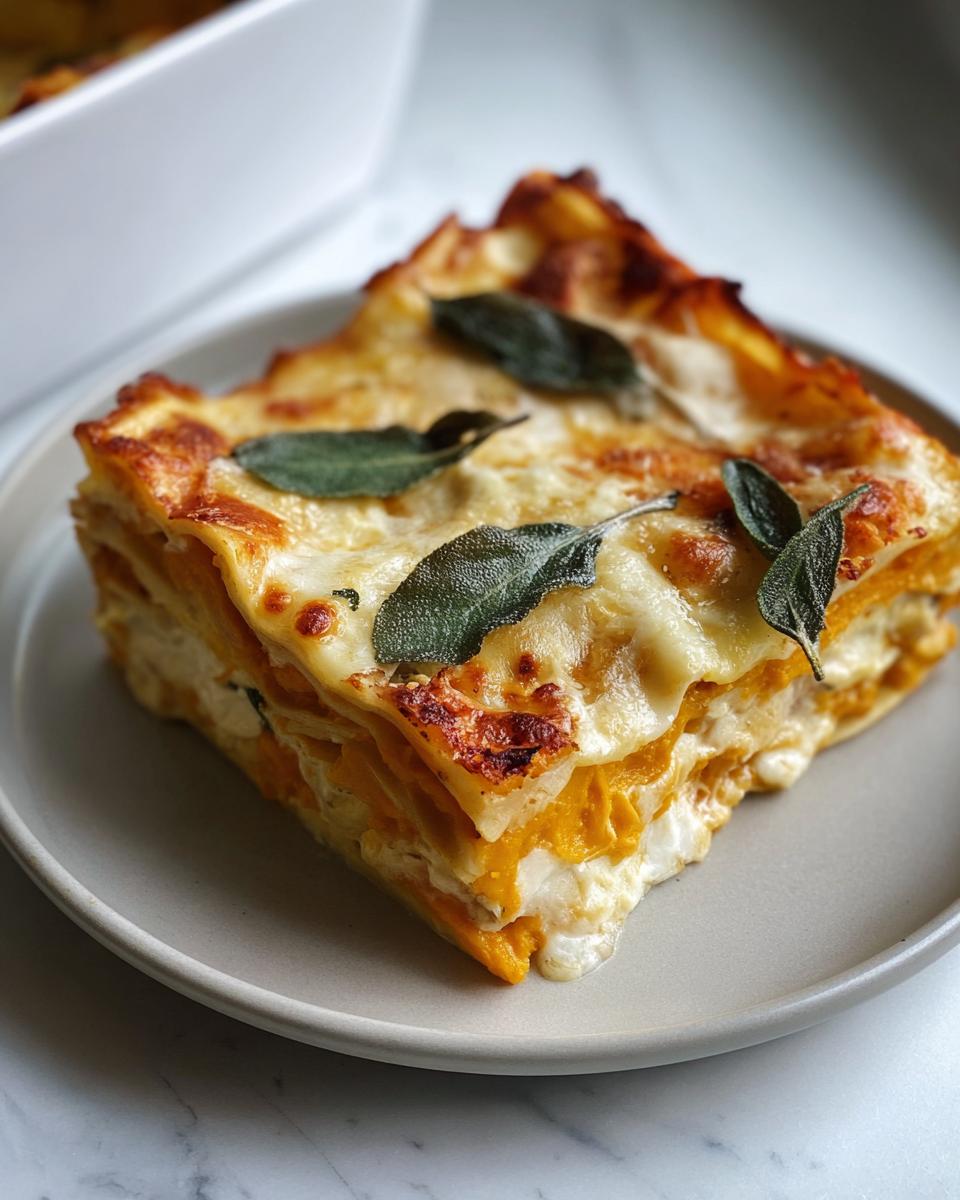
Making this butternut squash pasta layers-bake successfully comes down to avoiding a couple of common pitfalls, and I learned these the hard way! The biggest one is watery squash puree. Remember, if your puree is too loose, the whole lasagna will slump. If you suspect your roasted squash was a little watery, try cooking the scooped-out flesh in a skillet over medium heat for five minutes before blending—this evaporates excess liquid!
Also, don’t rush the béchamel! If you see lumps starting to form in your sage cream sauce, pull the pan off the heat immediately and whisk like mad. Once it’s smooth again, you can put it back on low heat. But honestly, the most crucial tip for presentation is letting it rest. Seriously, don’t cut into this right out of the oven. Give it a good 15 minutes on the counter. It tightens up, and those slices come out clean like you pictured!
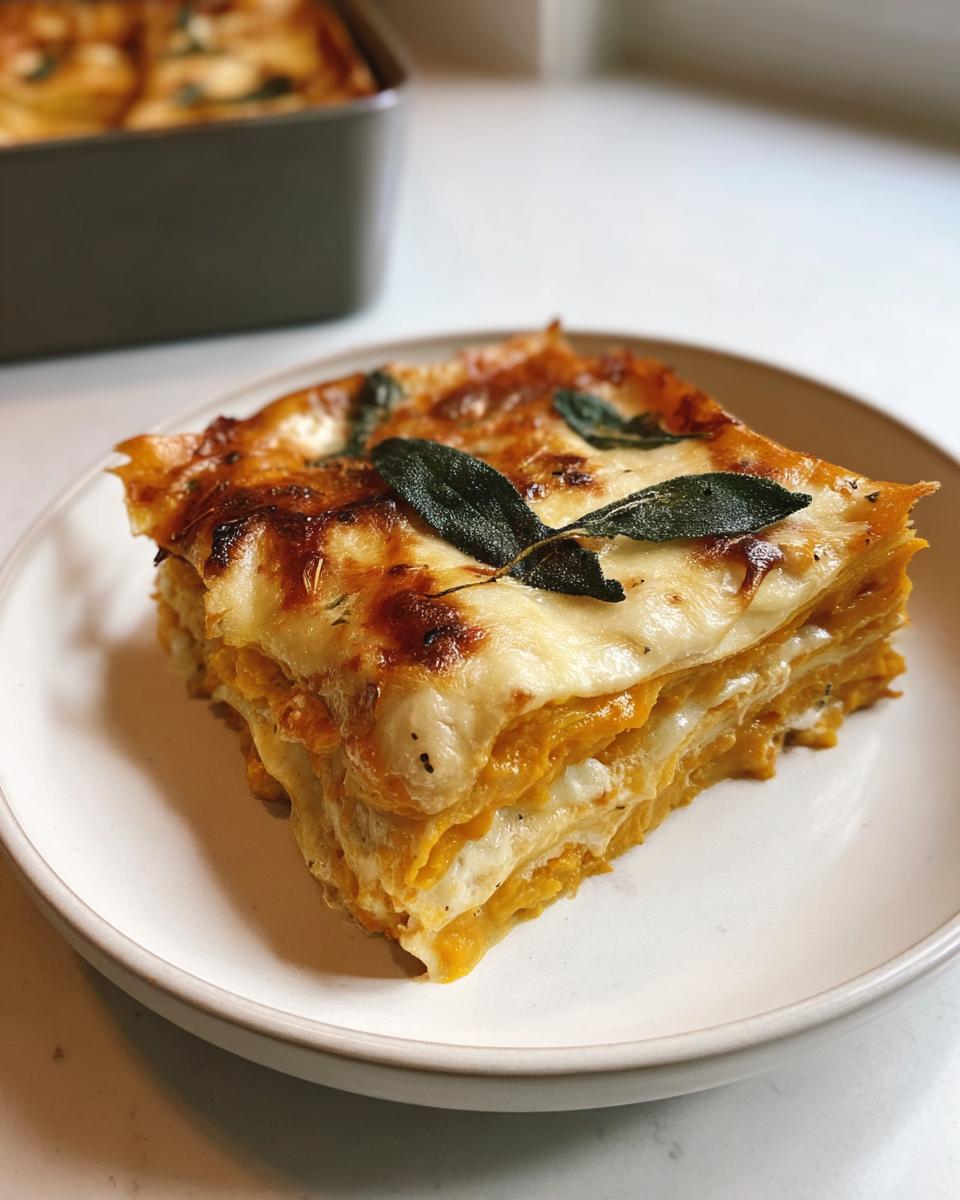
For even more foolproof dinner builds, check out what’s working best this year for crispy results: best dinner ideas 2025.
Storage and Reheating Instructions for This Vegetarian Holiday Main
When you make a masterpiece like this vegetarian holiday main, you are going to have leftovers—and that’s a wonderful thing! Nobody wants the party to end, but having leftovers means you get to enjoy that savory, creamy flavor again later. It stores incredibly well because the ingredients are so hearty.
To keep it safe and sound, you need to cover that baking dish tightly with plastic wrap or aluminum foil. If your lasagna piece doesn’t fit neatly under a standard lid, just cut a portion onto a smaller, airtight container—that’s my go-to method on the second day!
It keeps beautifully in the refrigerator for about three to four days. Honestly, I think the flavors actually deepen overnight, especially the way the squash marries with the sage cream sauce.
When you are ready for round two: you absolutely have to reheat it in the oven if you want to preserve that slightly crisp top layer. Try reheating individual slices on a microwave-safe plate covered loosely with a damp paper towel if you are in a rush, but frankly, microwaving tends to make the pasta a little tougher.
For a full remaining pan, cover it loosely with foil and warm it at about 350 degrees F until it’s thoroughly heated through—usually 20 to 30 minutes depending on how cold it was to start. Don’t forget, if you need quick inspiration for using leftover pasta or just want more of these hearty mains next time, swing by my pasta recipe ideas!
Frequently Asked Questions About Butternut Squash and Sage Lasagna
I get so many questions after people try a new recipe, and that’s wonderful! It means you’re experimenting and making it your own. Since this is a richer, more complex dish than your average weeknight meal, questions about the sage cream sauce and adjustments always pop up. Here are the things folks ask me most often about this perfect fall lasagna recipe.
Can I make the sage cream sauce ahead of time for this butternut squash pasta?
Yes, absolutely, and I highly recommend it if you’re hosting! The browned butter béchamel is great to make one day ahead. Store it covered in the fridge. But here’s the catch—it will solidify into a thick block because of all that butter and milk fat. When you go to use it, you need patience!
Gently reheat it on the stovetop over low heat—never blast it in the microwave! You’ll need to whisk in some extra milk, maybe a splash or two, until you get that beautiful, pourable consistency back. If you skip thinning it, you’ll end up with a dense, cheesy layer instead of a creamy one, and we’re not making a cheese casserole here, we are making lasagna!
How can I make this a heartier fall lasagna recipe?
That’s a classic question for a vegetarian holiday main, right? If you want to bulk up the heartiness without adding meat, you have a couple of fantastic options that really lean into those fall flavors. My absolute favorite addition is caramelized onions. Caramelize a large yellow onion very slowly, until they are totally jammy and sweet, and layer those in alongside the squash puree.
Alternatively, you can sauté some finely chopped cremini or portobello mushrooms until they release all their liquid and start to brown. Those earthy notes pair unbelievably well with the sage. Make sure you sauté the mushrooms until they are dry before layering them in, otherwise, you’ll risk making your lasagna watery!
What cheese works best instead of mozzarella in this Butternut Squash and Sage Lasagna?
Mozzarella is great because it melts beautifully and gives you that classic pull, but if you want to switch things up for a flavor boost in your Butternut Squash and Sage Lasagna, try Fontina! Fontina is incredible; it melts just as smoothly as mozzarella but brings a slightly nutty, more sophisticated flavor that complements the pumpkin and sage perfectly.
Another excellent choice is Provolone, especially the sharper versions. It adds a little bit of tanginess that cuts through the richness of the béchamel sauce. Just make sure whatever you choose, it’s a good melting cheese. We need that beautiful, bubbly, golden top, not separate clumps of cheese!
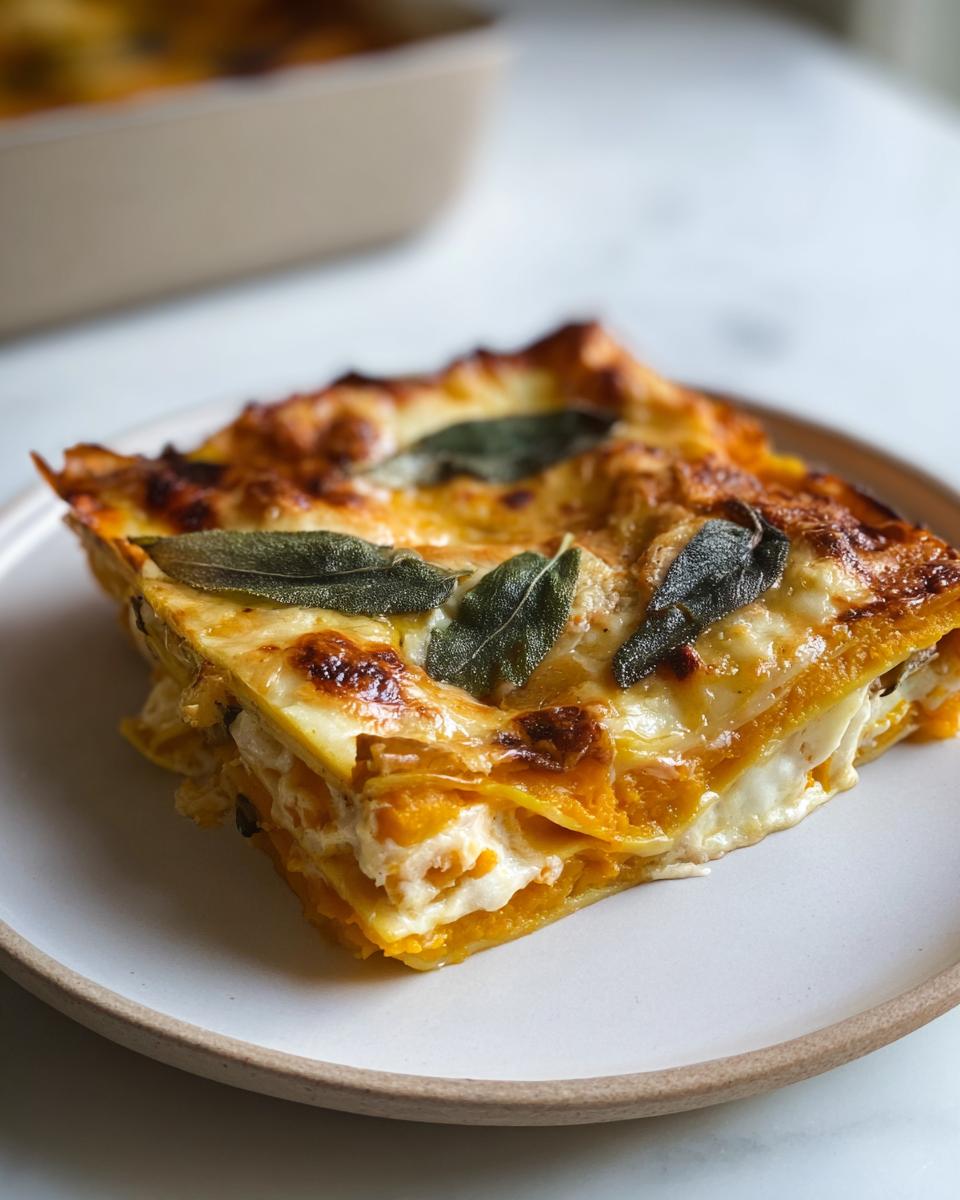
Estimated Nutritional Information for Butternut Squash and Sage Lasagna
Now, I know many of you are focused on the details of what goes into your body—just like I am when I’m calibrating my recipes! Knowing the nutritional breakdown for a hearty bake like this butternut squash pasta is important, especially since we’re using whole milk and a good amount of cheese and butter for flavor.
Remember, this recipe makes a large 9×13 pan, yielding 8 hearty servings. Based on my calculations—which, let’s be honest, vary wildly depending on the specific brand of Parmesan or the exact fat content of your milk—here are the estimates for one generous slice:
- Estimated Calories: 580-620 kcal
- Estimated Total Fat: 32g
- Estimated Protein: 28g
- Estimated Net Carbs: 45g
This is just an estimate, okay? If you use low-fat milk, switch out some of the cheese, or use thinner pasta sheets, these numbers change! My goal here is to prove that this dish can absolutely fit into a balanced eating plan—it’s packed with veggies, fiber from the squash, and great protein from the dairy. It proves you don’t have to sacrifice flavor or satisfaction, even when you’re tracking things closely. Cook with intention, and you’ll see great results!
Share Your Butternut Squash and Sage Lasagna Experience
You’ve roasted the squash, you’ve perfected the browned butter, and you’ve layered that magnificent butternut squash pasta to crispy, bubbly perfection. Now, the best part of cooking is sharing the results! I absolutely love hearing how this recipe turns out in *your* kitchens.
Did you add caramelized onions like I suggested? Did you find a brilliant substitution for the mozzarella? Don’t keep that culinary genius to yourself! This dish is built on generations of tweaks and flavor balancing, and I want to see what you bring to the table.
Drop a rating below—five stars always makes my day! If you run into a tricky spot, leave a comment; I’m in the kitchen often and I always read through your notes to see if we need to refine any steps for future cooks.
And if you captured a photo of your stunning fall lasagna recipe sitting ready for slicing, please tag me on social media using the hashtag #FlavorCalibration. Your triumphs inspire my next experiment! If you need to reach out directly about flavor profiles or techniques, you can always use my contact form here: reach out to Thomás.
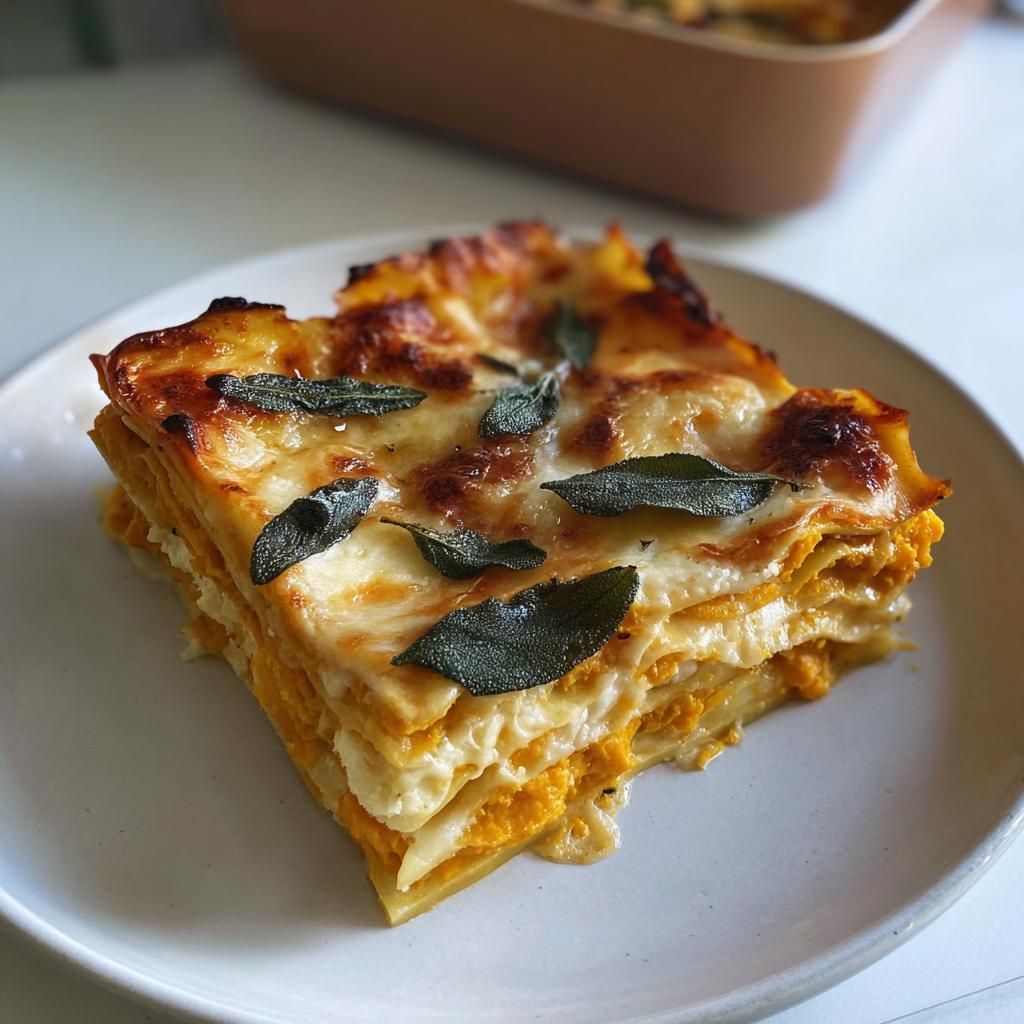
Butternut Squash and Sage Lasagna
Ingredients
Equipment
Method
- Pre-heat your oven to 400 degrees F.
- Cut the butternut squash in half lengthwise. Place the halves on a sheet tray, flesh side up. Drizzle the flesh with olive oil and a pinch of kosher salt, then rub to distribute.
- Cut about 1/4 to 1/2 of an inch from the top of the garlic head to expose the cloves. Drizzle with olive oil, sprinkle with salt, and wrap the head tightly in aluminum foil. Place the garlic on the baking sheet with the squash.
- Bake for 40 to 45 minutes, or until the squash flesh is tender and the garlic is soft and golden brown. The squash is done when a paring knife enters the thickest part easily.
- Allow the squash to cool for 15 to 20 minutes. Scoop out the seeds from the center of the squash.
- Scoop the cooked squash flesh into a blender. Squeeze the roasted garlic cloves from their skins and add them to the blender. Add 1.5 teaspoons of kosher salt and about 1/2 cup of water. Blend until the mixture is smooth and spreadable, adding more water if necessary to reach the correct consistency. Set this mixture aside.
- Brown the 6 tablespoons of butter in a saucepan over medium heat.
- Add the flour to the browned butter and cook for 1 minute over low heat to remove the raw flour taste.
- Slowly stream in the milk while whisking constantly to prevent lumps. The mixture will thicken initially but thin out as all the milk is added.
- Bring the mixture to a simmer over medium heat. Once simmering, cook for 2 more minutes while whisking until the béchamel has thickened enough to coat the back of a spoon. Finish with a pinch of nutmeg. Turn off the heat and set aside.
- Pre-heat your oven to 350 degrees F.
- Spread a thin layer of the butternut squash mixture on the bottom of a 9×13 inch baking pan to coat it.
- Layer the lasagna: top the squash with one layer of noodles, 1/3 of the remaining squash mixture, 1/4 of the béchamel, 1/4 of the mozzarella, and 1/4 of the Parmesan. Repeat this layering sequence two more times.
- Top the final layer with the last of the noodles, the remaining 1/4 of the béchamel, and the remaining 1/4 of each cheese.
- Bake for 45 minutes to 1 hour, until the lasagna is bubbling and golden brown on top.
- While the lasagna bakes, heat the 2 tablespoons of butter in a large skillet. Add the sage leaves and fry them on both sides until they become crispy.
- Finish the lasagna by topping it with the crispy sage leaves before serving.
Notes
Tried this recipe?
Let us know how it was!
Precision Keto Scientist
Numbers don’t lie, and neither do my recipes. I’m a biochemist who fell into keto cooking through my own metabolic research—and I approach recipe development like a lab experiment, complete with macro calculations precise to the tenth of a gram.
My journey started in diabetes research labs at Johns Hopkins, where I spent six years studying how different macronutrient ratios affected insulin sensitivity. Personal experimentation with therapeutic ketosis for cognitive enhancement led me down a rabbit hole of recipe testing that eventually consumed more hours than my actual day job.
While other cookbook authors describe flavors and textures, I quantify ketone elevation curves and glycemic impact data. My recipe database contains 340+ formulations, each tagged with detailed nutritional analysis, predicted ketosis timing, and optimal meal spacing. I measure salt by weight, time cooking processes to the minute, and log ingredient sourcing obsessively for consistent results.
My breakthrough research on fat-protein ratios for sustained ketosis got published in the Journal of Nutritional Biochemistry. My “Macro Math Mastery” workshops have trained over 5,000 people in precision meal planning. I even collaborated with continuous glucose monitor manufacturers to create the first real-time feedback system for recipe optimization.
I left my pharmaceutical research position at Merck three years ago to focus on metabolic nutrition consulting. Now I work with professional athletes, biohackers, and medical professionals seeking therapeutic ketosis protocols. When I’m not in my lab-kitchen, I’m competing in chess tournaments or documenting my daily biomarker measurements with true data scientist obsessiveness.
Cooking is just applied chemistry—and chemistry follows predictable rules. Master the variables, control the outcomes.