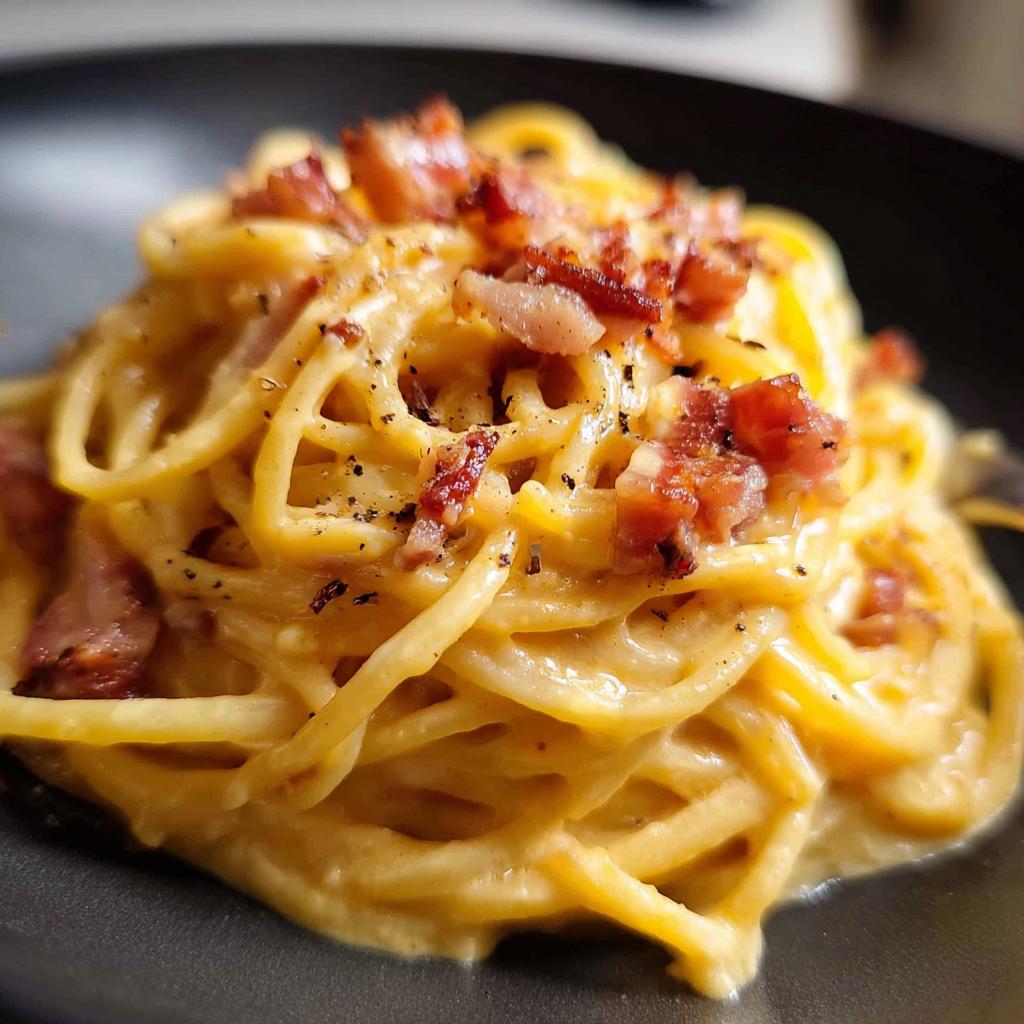
Ingredients
Equipment
Method
- Cut the guanciale into 0.5cm thick slices, then into batons.
- In a large bowl, whisk together the eggs and egg yolks. Stir in the shredded Parmigiano Reggiano and black pepper.
- Bring 4 liters of water to a boil in a large pot with the salt. Add the spaghetti and cook according to package directions.
- Just before draining the pasta, reserve 1 cup of the pasta cooking water. Drain the pasta.
- While the pasta cooks, place the guanciale in a non-stick pan over medium-high heat. Cook for 4 to 5 minutes until golden. The fat will melt, allowing the guanciale to fry in its own fat. If using garlic, add it in the last minute of cooking.
- Add the drained pasta to the pan with the guanciale and toss to coat in the rendered fat.
- Transfer the pasta and any fat from the pan into the bowl with the egg mixture. Add 1/2 cup of the reserved pasta cooking water. Stir vigorously for 1 minute until the sauce becomes creamy and coats the pasta.
- Serve immediately in warm bowls. Garnish with extra Parmigiano Reggiano, black pepper, and chopped parsley if desired.
Notes
For an economical version, use bacon instead of guanciale and parmesan instead of Parmigiano Reggiano. Avoid adding cream. Guanciale is cured pork jowl, traditionally used in carbonara. It can be found in Italian or specialty delis. If unavailable, substitute with block bacon or pancetta, ensuring it is streaky for sufficient fat. Use large eggs (55-60g each). Finely shred your own Parmigiano Reggiano or Pecorino Romano; pre-grated cheese will not melt properly. Garlic is not traditional but adds flavor. Leftovers can be stored for 3 days, but carbonara is best eaten fresh.