Ingredients
Equipment
Method
- Dry the prime rib thoroughly with paper towels on all sides.
- Sprinkle the kosher salt evenly over all sides of the prime rib from about 6 inches above.
- In a small bowl, combine rosemary, thyme, pepper, and paprika. Stir and break up the rosemary. Evenly sprinkle the rub over the prime rib, massaging it into the meat.
- Tightly wrap the prime rib twice in plastic wrap. Place on a plate and refrigerate overnight, or for at least 1 hour (preferably 6-24 hours).
- About 30 minutes before cooking, preheat your oven to 275F. Remove the roast from the refrigerator and unwrap it.
- Place a wire trivet in a cast iron skillet, roasting pan, or shallow oven-safe pan. Place the roast, fat side up, in the center of the trivet.
- Pour the beef broth into the bottom of the pan, avoiding the meat. If using vegetables, place them around the roast.
- Insert an oven-safe meat thermometer into the center of the roast, ensuring it does not touch fat.
- Place the roast in the preheated oven. Cook for approximately 2 hours and 25 minutes (24-27 minutes per pound) until the internal temperature reaches 125F for medium-rare.
- Begin checking the temperature after about 2 hours, monitoring every 10-15 minutes until the desired internal temperature is reached. Remember the temperature will rise 5-10 degrees while resting.
- Carefully remove the roast from the oven. Tent the pan with aluminum foil. Turn the oven up to 450F.
- Let the roast rest for 15-20 minutes, or until the internal temperature reaches 130-135F. Allow the oven to preheat to 450F during this time.
- Remove the foil and thermometer. Return the roast to the hot oven for 5-8 minutes to sear until the crust is brown and crispy.
- Carefully remove the roast from the oven. Transfer the prime rib to a cutting board and vegetables to a serving dish. Save drippings for Au Jus.
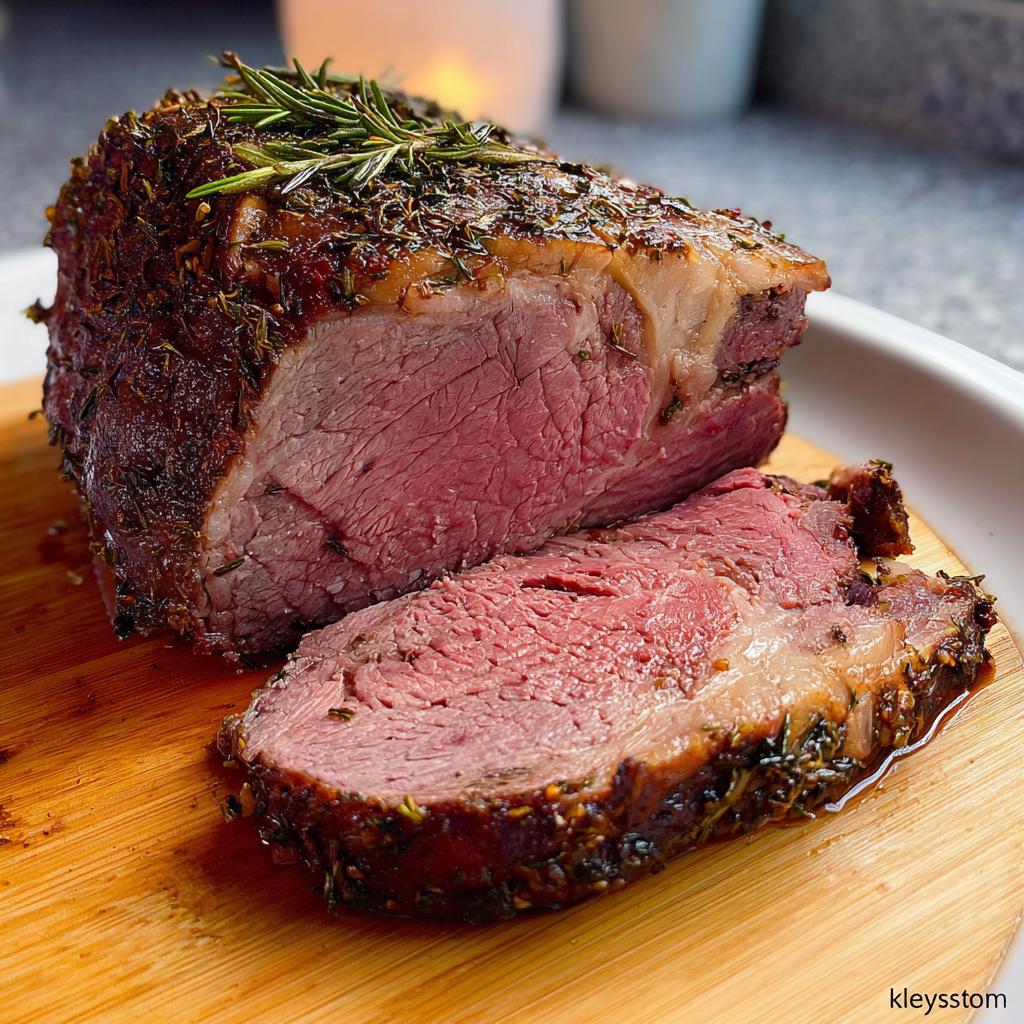
- Slice the roast against the grain with a sharp knife. Garnish with fresh rosemary and serve with desired sides and Au Jus.
Nutrition
Notes
For different levels of doneness, aim for these internal temperatures: Rare (115F initial, 120-125F after rest), Medium (130-135F initial, 135-145F after rest), Medium Well (140-145F initial, 145-155F after rest), Well (150-155F initial, 155-165F after rest). Using a shallow pan allows for even airflow, ensuring uniform cooking. If a boneless roast is unavailable, a bone-in roast can be used, with the bone removed by your butcher.